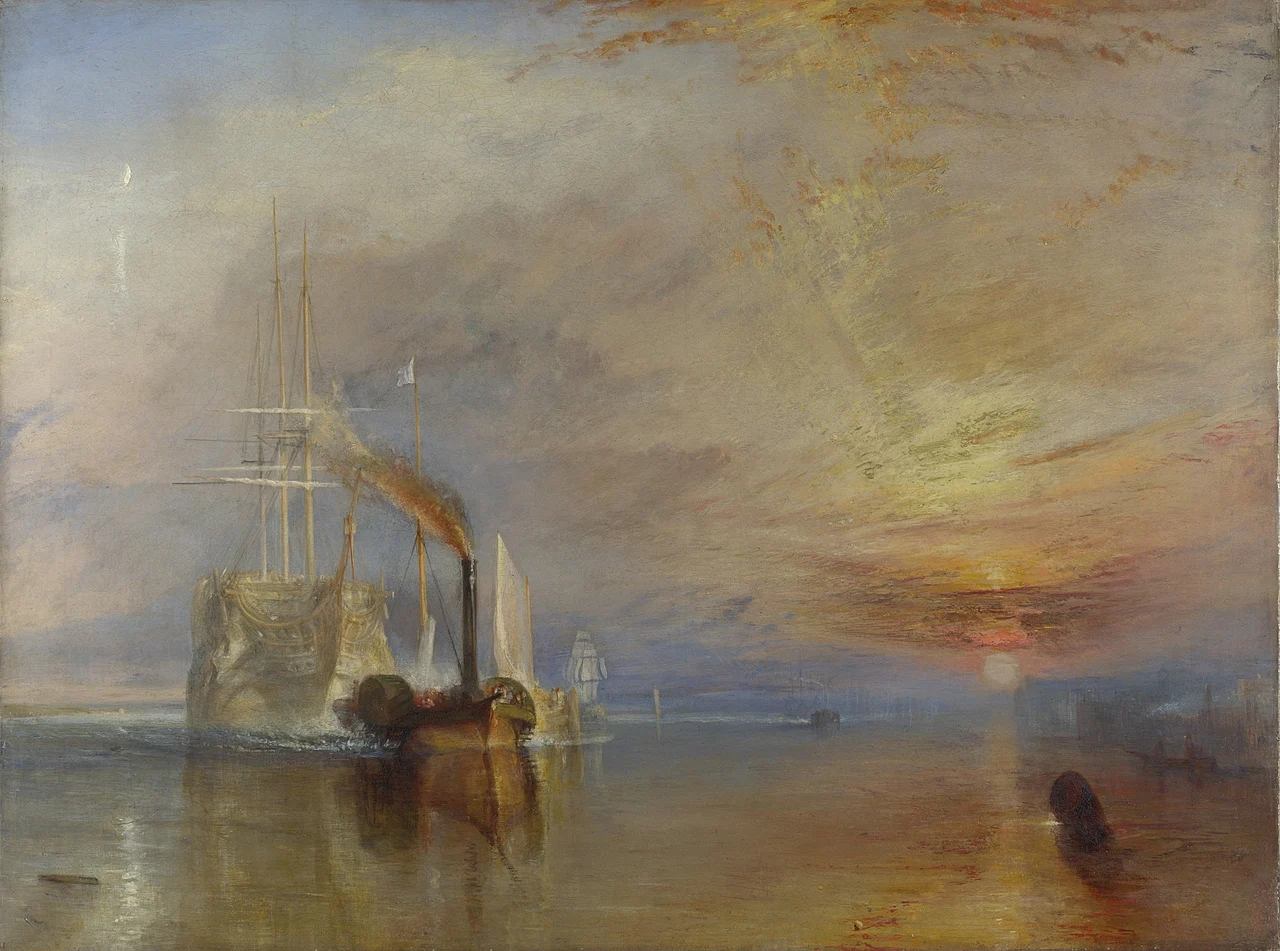
The Fighting Temeraire
by J.M.W. Turner, 1839
Details
- Year
- 1839
- Medium
- Oil on canvas
- Size
- 90.7 cm × 121.6 cm
- Gallery
- Room 34
J.M.W. Turner painted The Fighting Temeraire in 1839, depicting a legendary warship being towed to the breaker's yard. The Temeraire had fought heroically at the Battle of Trafalgar in 1805, but now a squat black tugboat pulls the pale ghost of the old ship toward demolition. A blazing sunset fills the sky with orange and gold.
The work an elegy for the age of sail. Steam power was replacing wind, industry was transforming Britain, and Turner saw the grand old warship as a symbol of a vanishing world. He called it "my darling" and refused to sell it during his lifetime. The Romantic master built the composition around the contrast between the ghostly white ship and the belching black tug, past glory surrendering to industrial progress.
British voters named it the nation's favorite painting in a 2005 BBC poll. Turner bequeathed his unsold works to the nation, and The Fighting Temeraire has hung at The National Gallery in London since 1856.
Historical Significance
Voted Britain's greatest painting in a 2005 poll, it symbolizes the passing of the age of sail.