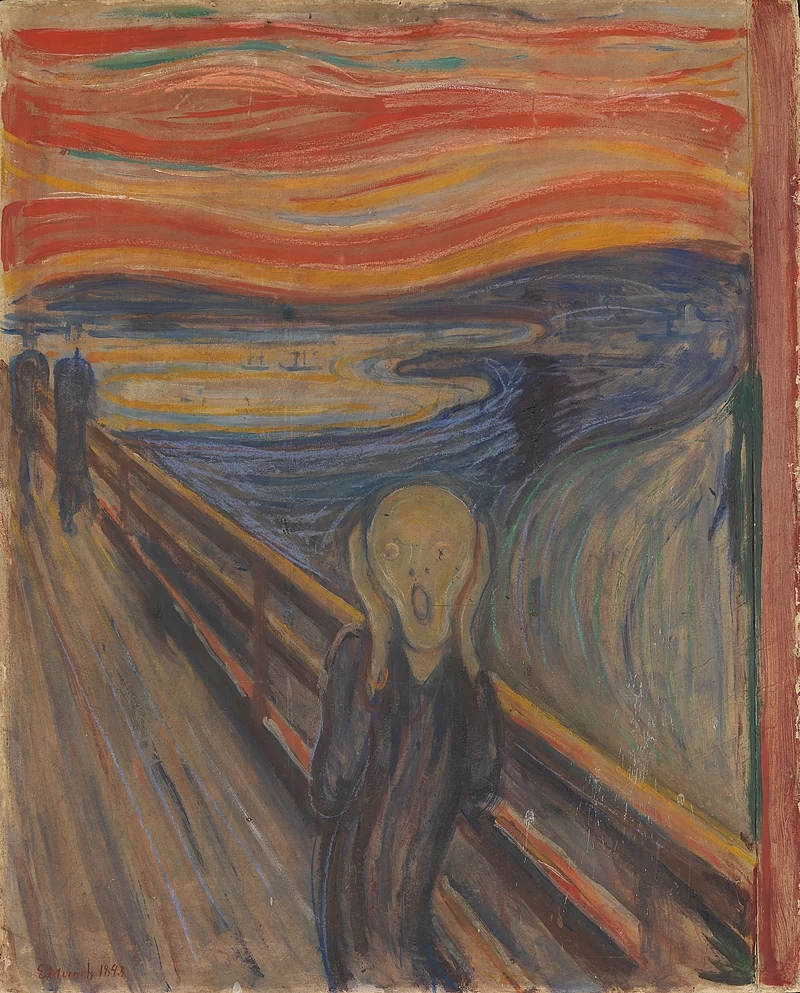
The Scream
by Edvard Munch, 1893
Details
- Year
- 1893
- Medium
- Oil, tempera, and pastel on cardboard
- Size
- 91 cm × 73.5 cm
- Gallery
- Munch Hall
Auction History
$119.9M
Sotheby's / New York
May 2, 2012
Seller
Petter Olsen
Buyer
Leon Black
That agonized figure against a blood-red sky has become a universal symbol of modern anxiety. Edvard Munch created The Scream in 1893, depicting a man on a bridge, hands raised to his face, mouth open in a silent howl while two shadowy figures walk behind him. The swirling orange and blue lines of sky and water seem to echo the figure's distress.
Munch described the inspiration in his diary: walking at sunset, he suddenly felt "an infinite scream passing through nature." The painting captures that moment of existential dread, when the ordinary world suddenly seems alien and terrifying. The figure's skull-like face and boneless body suggest someone stripped to pure emotion.
This version, painted in oil, tempera, and pastel on cardboard, is the most famous of four versions Munch created. It has been stolen twice from Norwegian museums and recovered both times. The Expressionist work now hangs at the National Gallery of Norway in Oslo, protected by significantly upgraded security.
Historical Significance
Became an icon of existential anxiety and one of the most recognizable images in art history.