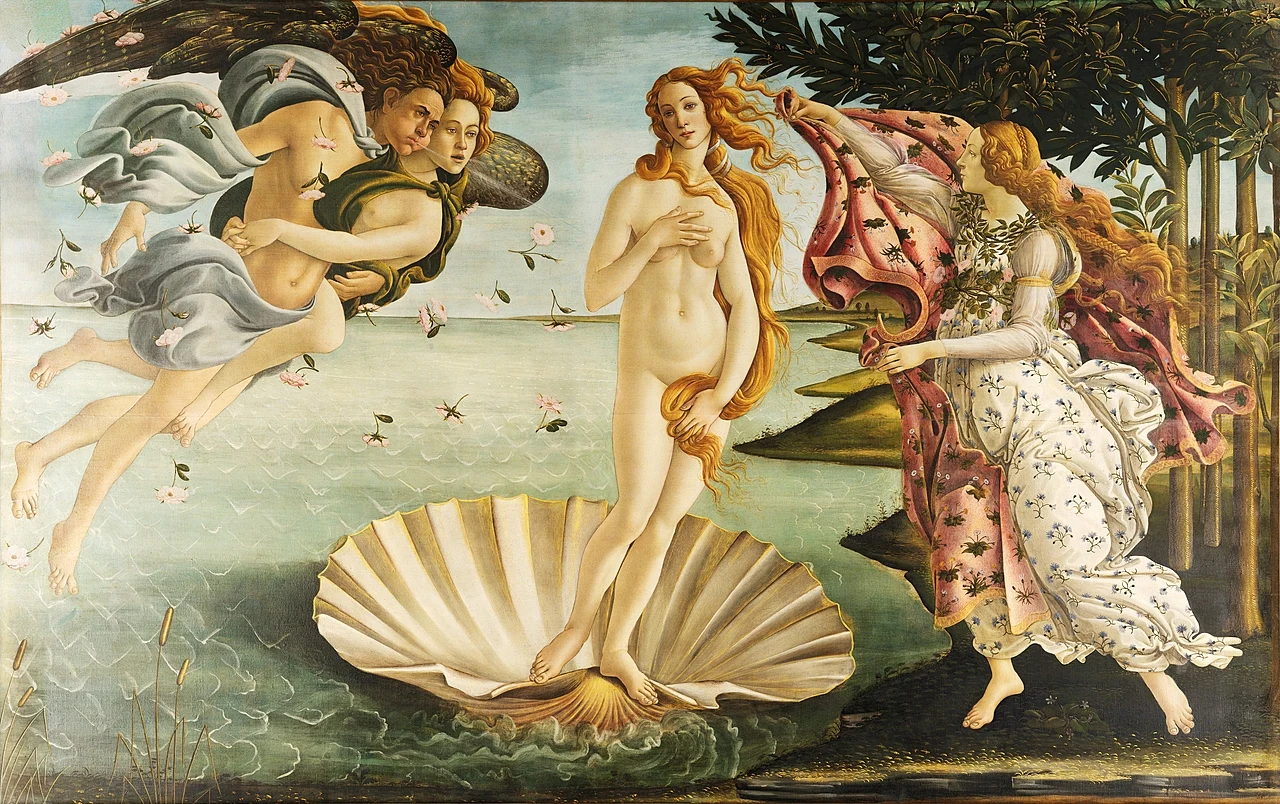
The Birth of Venus
by Sandro Botticelli, 1485
Details
- Year
- 1485
- Medium
- Tempera on canvas
- Size
- 172.5 cm × 278.5 cm
- Gallery
- Botticelli Hall
Estimated Value
$500M
Expert estimate
Italian artist Sandro Botticelli painted this iconic scene around 1485, depicting the goddess Venus arriving at the shore after her birth from the sea foam. She stands on a giant scallop shell, blown toward land by Zephyr and Chloris on the left, while a figure often identified as one of the Horae waits on the right with a floral cloak.
The painting draws from classical mythology and Neoplatonic philosophy popular in Renaissance Florence. Botticelli likely created it for Lorenzo di Pierfrancesco de' Medici, a cousin of the famous Lorenzo the Magnificent. The elongated proportions and graceful pose reflect the artist's distinctive style rather than anatomical realism. Venus's face may have been modeled on Simonetta Vespucci, a Florentine beauty who died young and was idealized in poetry and art.
The work measures an impressive 172.5 by 278.5 centimeters and uses tempera on canvas, an unusual choice for the period. Today it hangs in the Uffizi Gallery in Florence, where it remains one of the most visited paintings in the collection.
Historical Significance
Represents the pinnacle of Early Renaissance ideals of beauty and classical mythology.