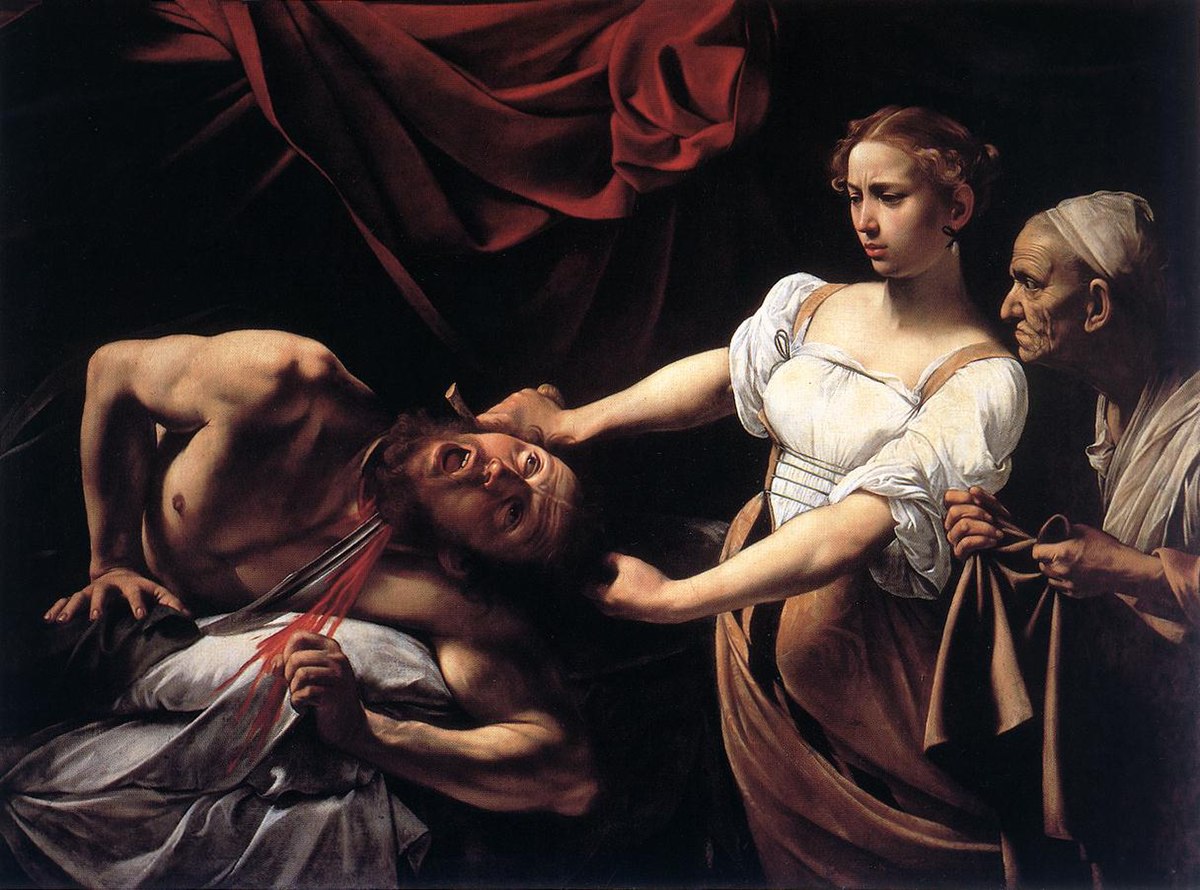
Judith Beheading Holofernes
by Caravaggio, 1599
Details
- Year
- 1599
- Medium
- Oil on canvas
- Size
- 145 cm × 195 cm
- Gallery
- Barberini Gallery
Caravaggio painted this visceral scene around 1599, showing the moment when the widow Judith beheads the Assyrian general Holofernes. Blood spurts across the white sheets as Judith saws through his neck with grim determination. Her elderly maid stands ready with a sack for the head. The dramatic lighting throws everything into sharp relief against an impenetrable black background.
Wealthy banker Ottavio Costa commissioned the work and treasured it so highly he covered it with a silk curtain and stipulated in his will that it should never leave his family. The model for Judith was reportedly Fillide Melandroni, a Roman prostitute who posed for Caravaggio several times. He seemed to enjoy casting courtesans as biblical heroines.
The painting vanished for centuries until restorer Pico Cellini found it in 1951 at a Roman family's home. Critic Roberto Longhi authenticated it, and in 1971 the Italian state purchased it for the Galleria Nazionale d'Arte Antica in Palazzo Barberini. Never before had the subject been depicted with such unflinching brutality.
Historical Significance
Shows Caravaggio's unflinching realism and dramatic lighting at its most intense.