Wikimedia Commons • Public Domain
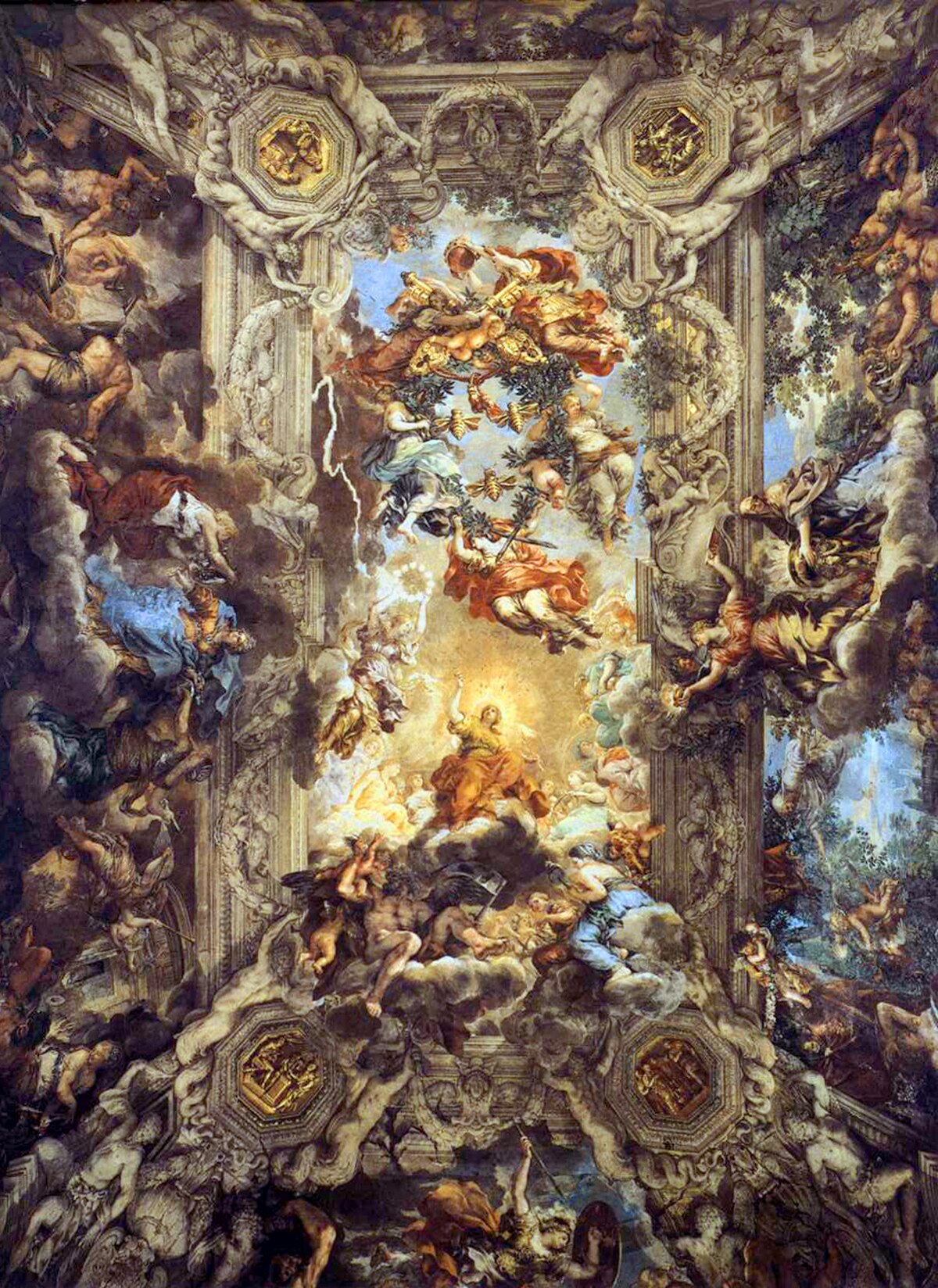
Allegory of Divine Providence and Barberini Power
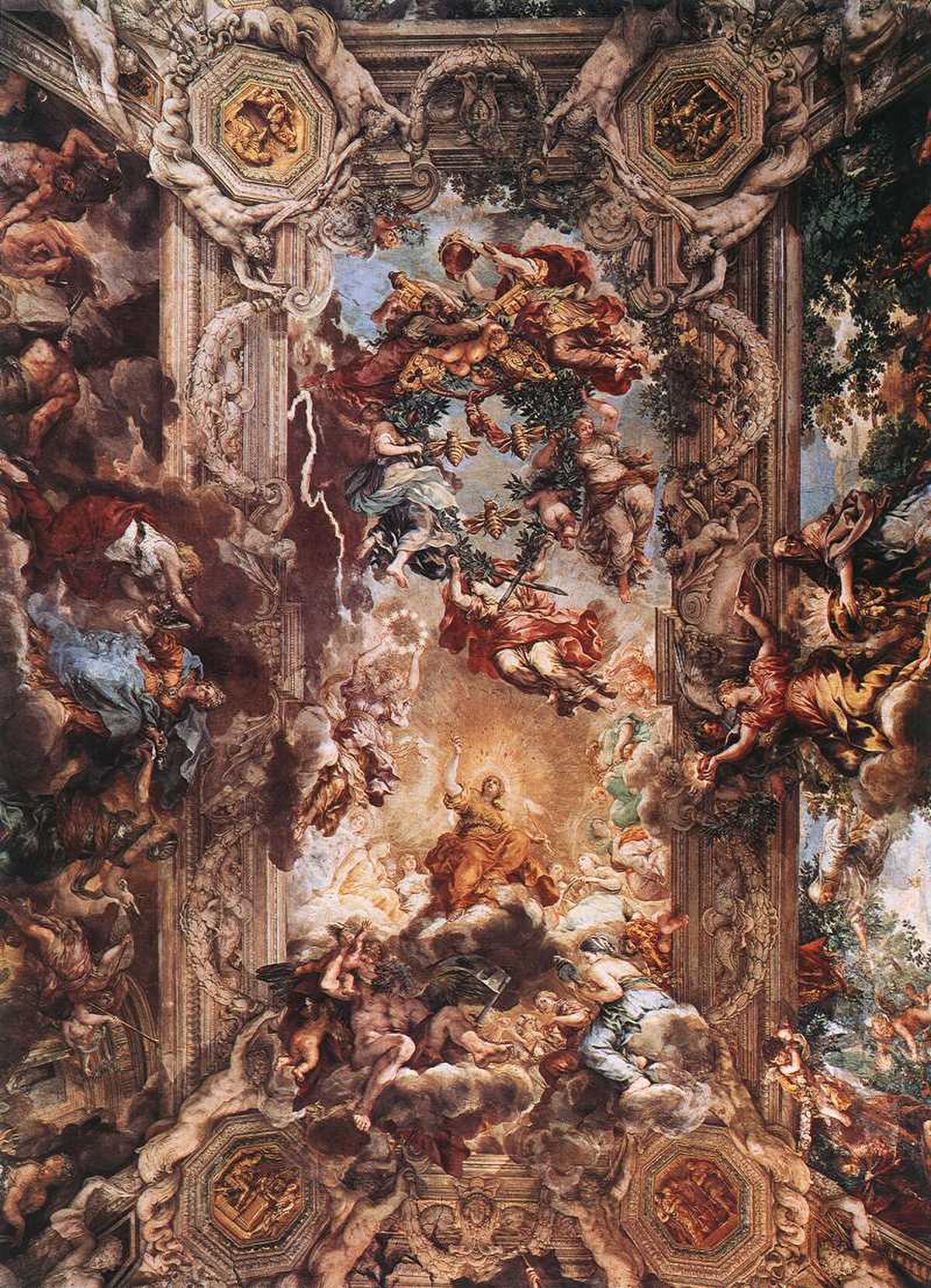
Pietro da Cortona spent seven years painting this massive ceiling fresco in Rome's Palazzo Barberini, completing it in 1639. The work covers roughly 600 square meters, making it one of the largest ceiling paintings ever created. Pope Urban VIII, born Maffeo Barberini, commissioned the piece to glorify his family's divine right to power.
The composition breaks through architectural boundaries in a technique called quadratura. Figures appear to float upward into an infinite sky, shattering the illusion of a solid ceiling. At the center, Divine Providence gestures toward three giant bees, the Barberini family symbol, while Immortality crowns them with stars. Surrounding scenes depict virtues triumphing over vices, with over 100 figures swirling through clouds and architectural frameworks.
This ceiling established the template for High Baroque decoration across Europe. The dramatic foreshortening, explosive composition, and theatrical lighting influenced countless artists for the next century. The Palazzo Barberini now serves as part of Italy's national gallery, and visitors can view this overwhelming spectacle from the gran salone. Our Italian Renaissance collection features related masterworks.