Wikimedia Commons • Public Domain
John the Baptist
by Caravaggio
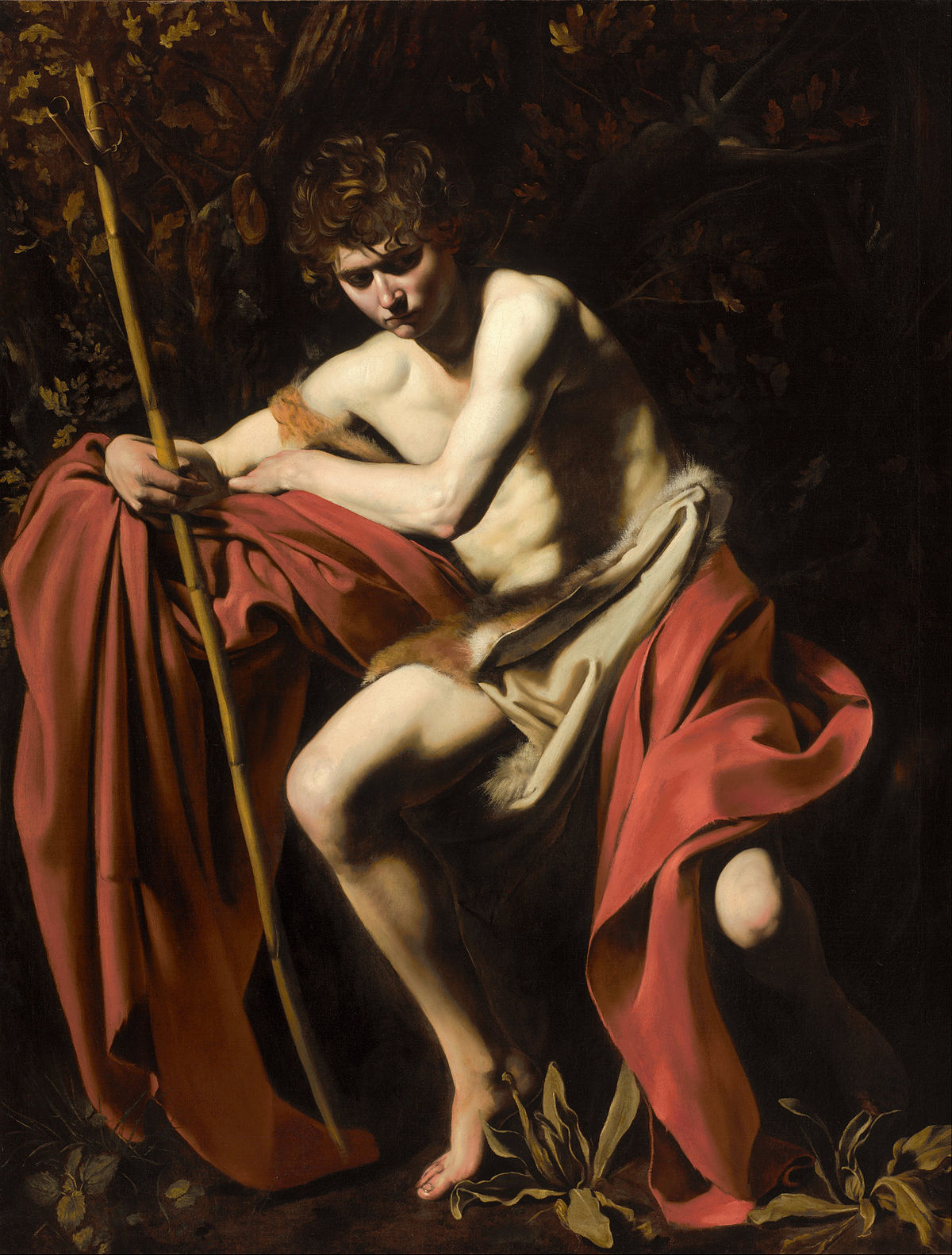
Caravaggio returned to the subject of John the Baptist more than any other, creating at least eight versions between 1598 and 1610. His decision to depict the saint as a youth was unusual for the period. Traditionally, artists showed John either as an infant with the Christ child or as an adult baptizing Jesus. Caravaggio instead portrayed a solitary boy in the wilderness, based on the Gospel of Luke's statement that "the child was in the deserts until the day of his manifestation to Israel."
The various versions share common elements: the young saint is typically shown half-reclining, accompanied by a ram, with little to identify him beyond a scrap of camel skin and sometimes a cross. The sensuous treatment of the figure and mysterious expressions suggest personal meaning for the artist. Leonardo and Andrea del Sarto had painted similar youthful Baptists, and Caravaggio turned this into something like a personal icon through his many variations.
This version resides at Toledo Cathedral in Spain. For those interested in spiritual art, Caravaggio's Baptist paintings offer a distinctively personal interpretation of a traditional subject.