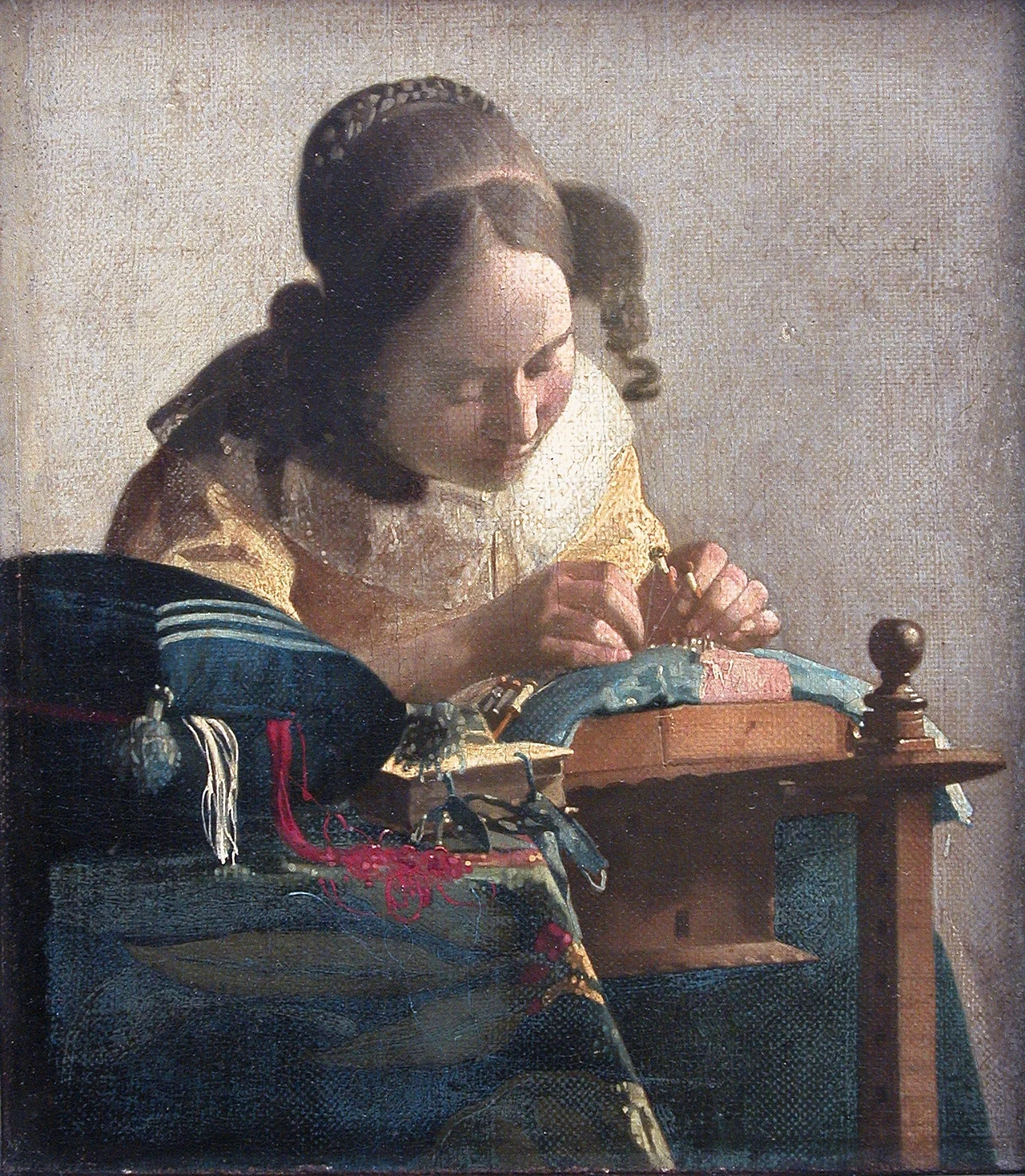
The Lacemaker
by Johannes Vermeer, 1670
Details
- Year
- 1670
- Medium
- Oil on canvas
- Size
- 24.5 cm × 21 cm
Johannes Vermeer painted The Lacemaker around 1669-1670, his smallest and perhaps most concentrated work. A young woman bends over her bobbin lace pillow, utterly absorbed in the delicate work. Threads spill from a sewing cushion in the foreground, rendered with soft blur that suggests red and white liquid.
The painting measures just 24.5 by 21 centimeters, barely larger than a paperback book. Vermeer probably used a camera obscura while composing it. The optical device would explain the blurred foreground and precisely focused subject, effects unusual for Dutch Baroque painting but familiar to anyone who has used a camera.
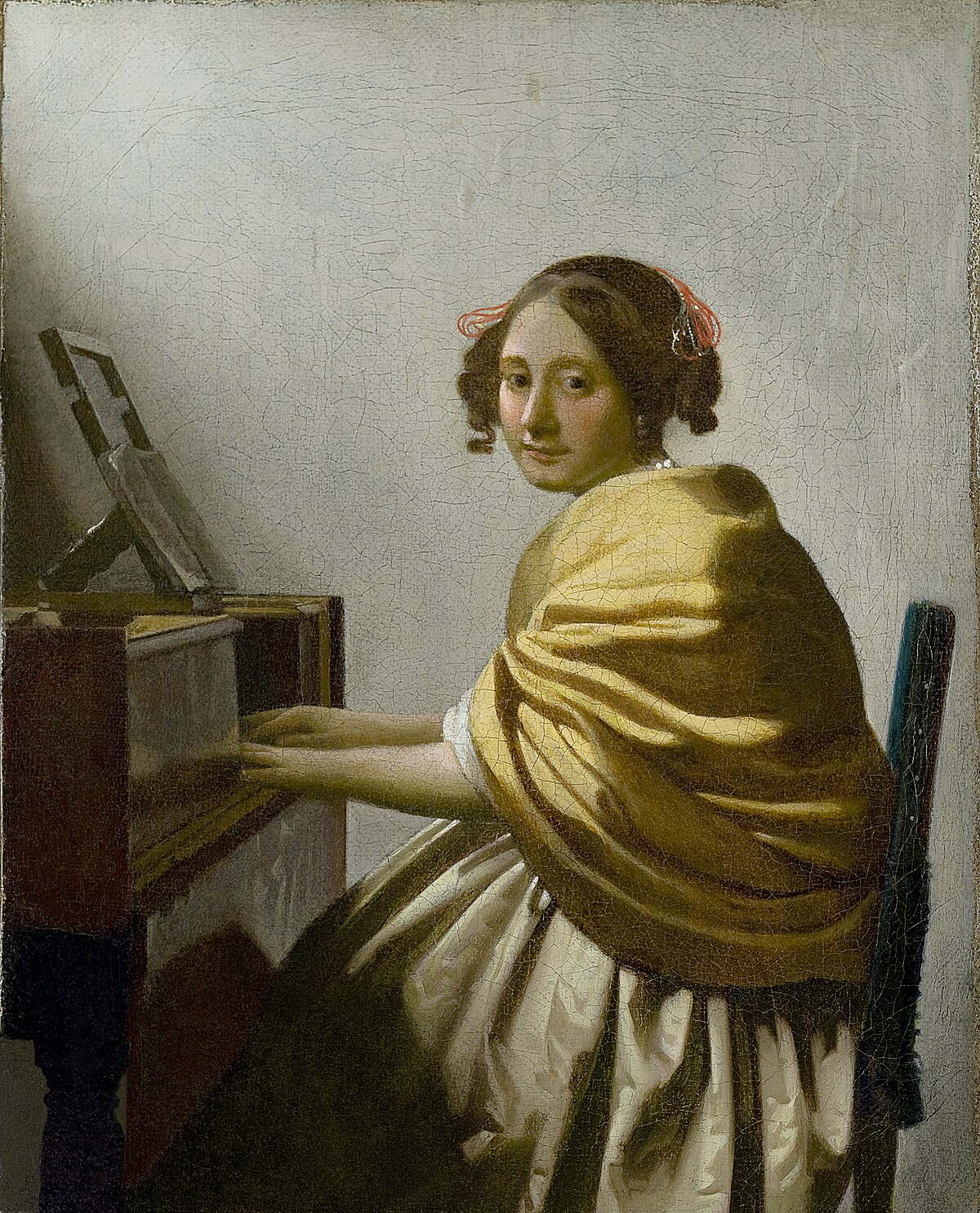
The canvas originally matched dimensions with A Young Woman Seated at the Virginals, suggesting Vermeer cut them from the same bolt. It entered the Louvre collection in 1870. Along with The Milkmaid and Girl with a Pearl Earring, it ranks among the artist's most recognized works. Dutch tradition associated needlework with domestic virtue, a theme reinforced by the small book beside her, likely a Bible or prayer book.