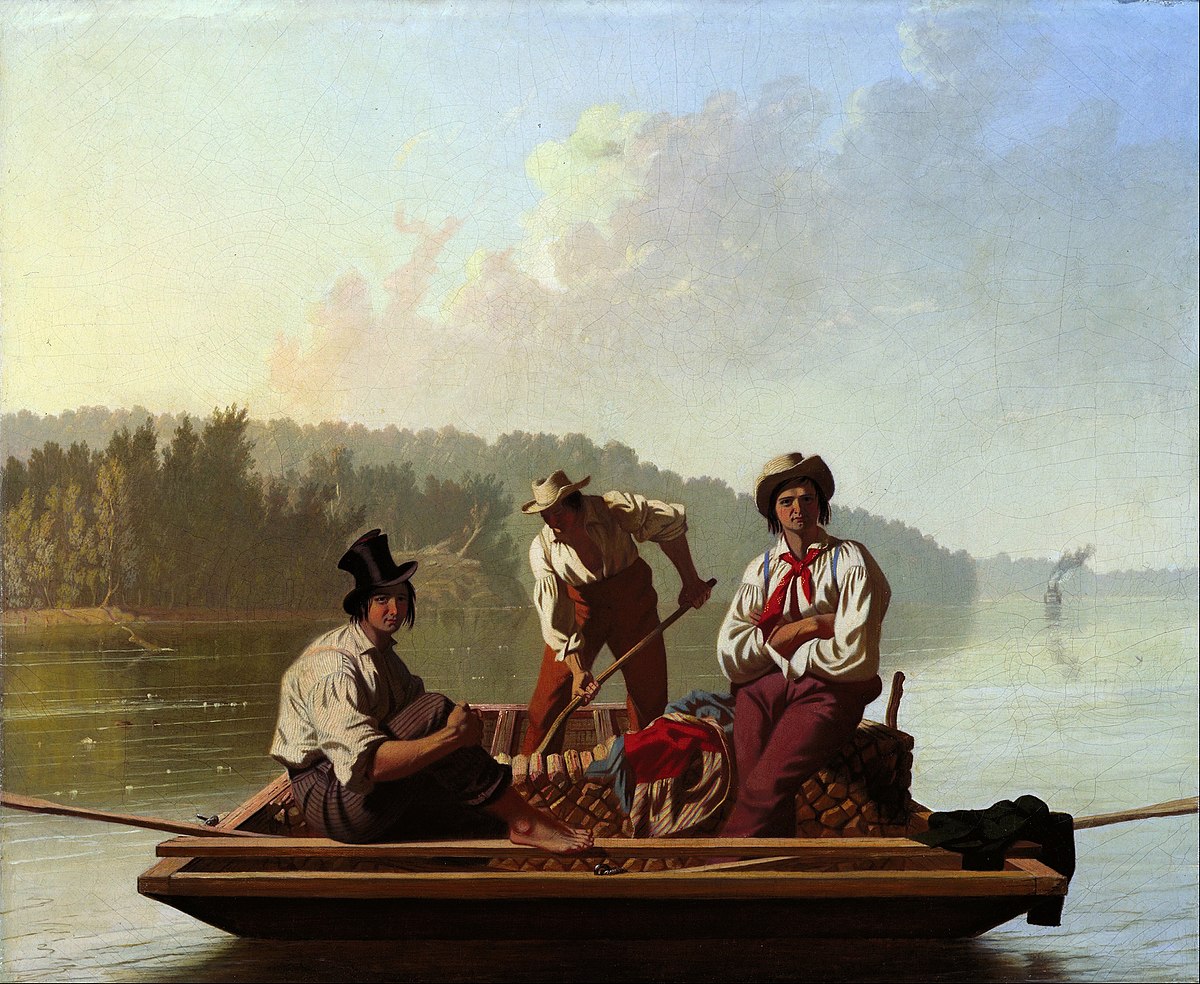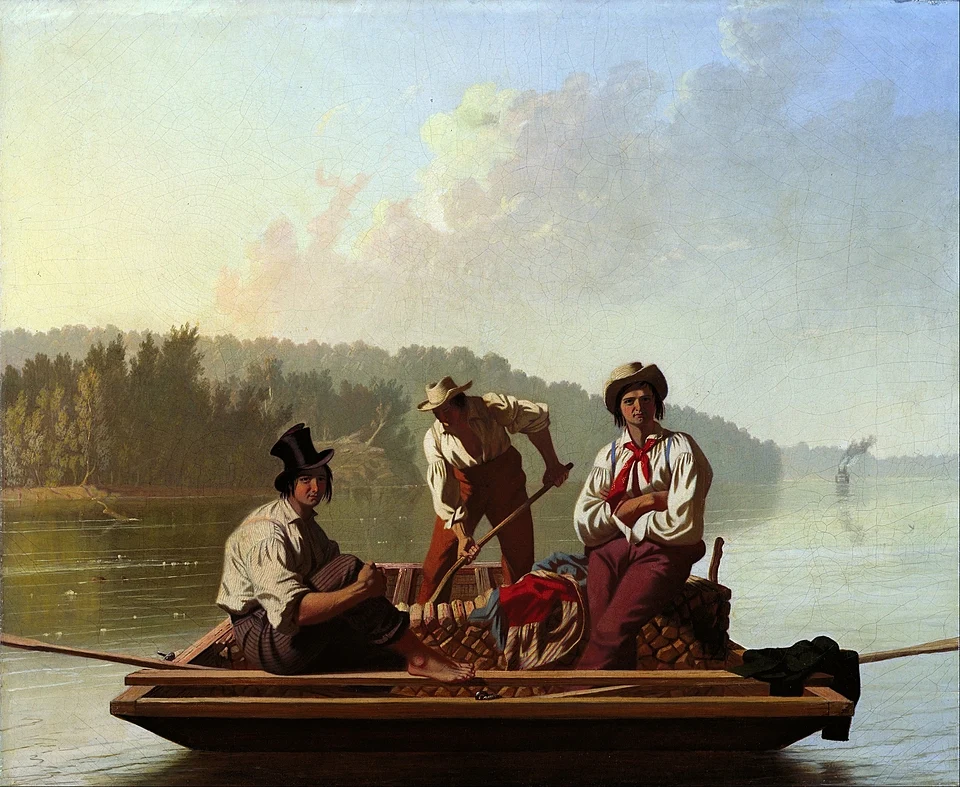
Fur Traders Descending the Missouri
by George Caleb Bingham, 1845
Details
- Year
- 1845
- Medium
- Oil on canvas
- Size
- 73.7 cm × 92.7 cm
American artist George Caleb Bingham painted this tranquil scene in 1845, one of his earliest genre paintings after working mainly as a portraitist. A French trader and his mixed-race son drift down the Missouri River in a dugout canoe, a chained animal (possibly a bear cub or fox) crouched at the prow. Morning mist rises from the glassy water, creating the luminous atmosphere that defines American Luminism.
Bingham originally titled the work "French Trader & Half breed Son." The American Art-Union, which exhibited and distributed the painting, changed it to avoid controversy. Fur trappers frequently married Native American women, and the Art-Union wanted a title that wouldn't alarm Eastern audiences. The tranquil scene idealized frontier life for viewers who'd never experience it firsthand.
The painting fell into obscurity until the Metropolitan Museum of Art purchased it in 1933, recognizing it as one of the finest American paintings of the 19th century. Bingham captured a vanishing world: the fur trade was already declining when he painted this, and within decades the frontier would be transformed forever.