Wikimedia Commons • Public Domain
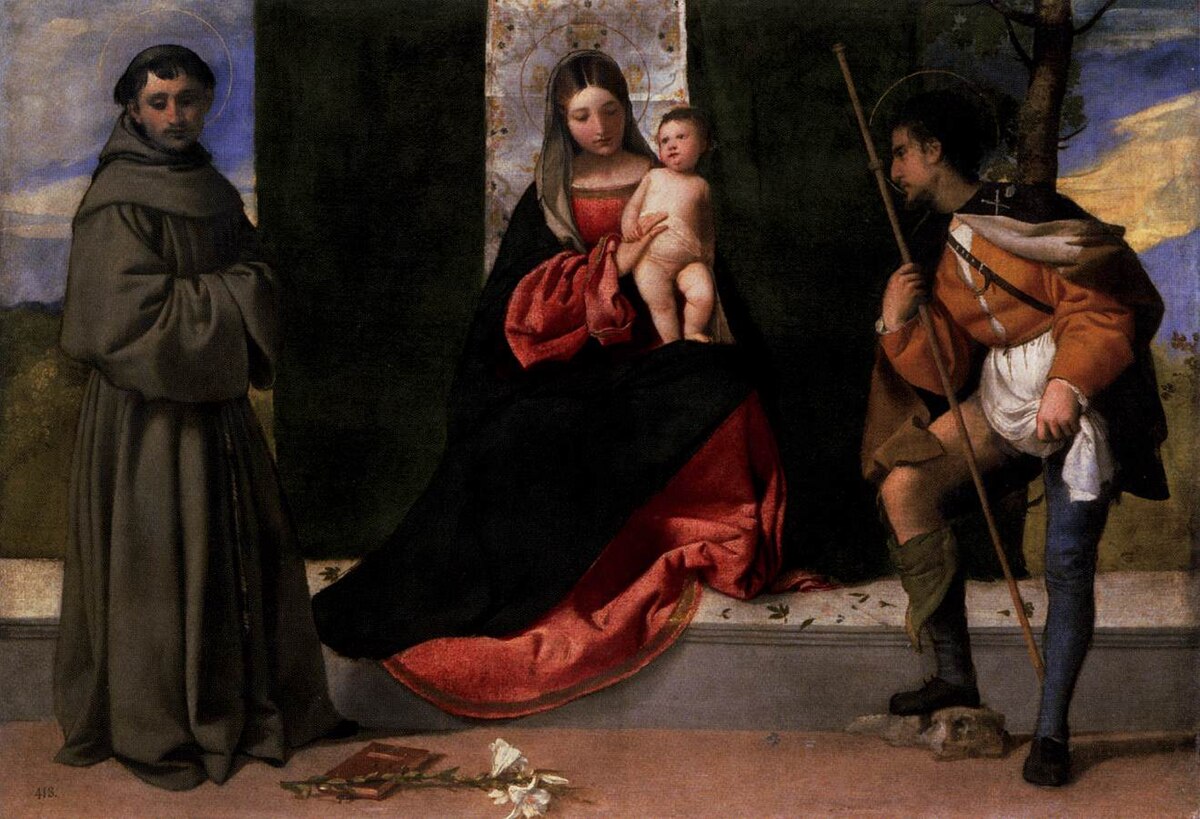
Madonna and Child with Sts Anthony of Padua and Roch
by Titian
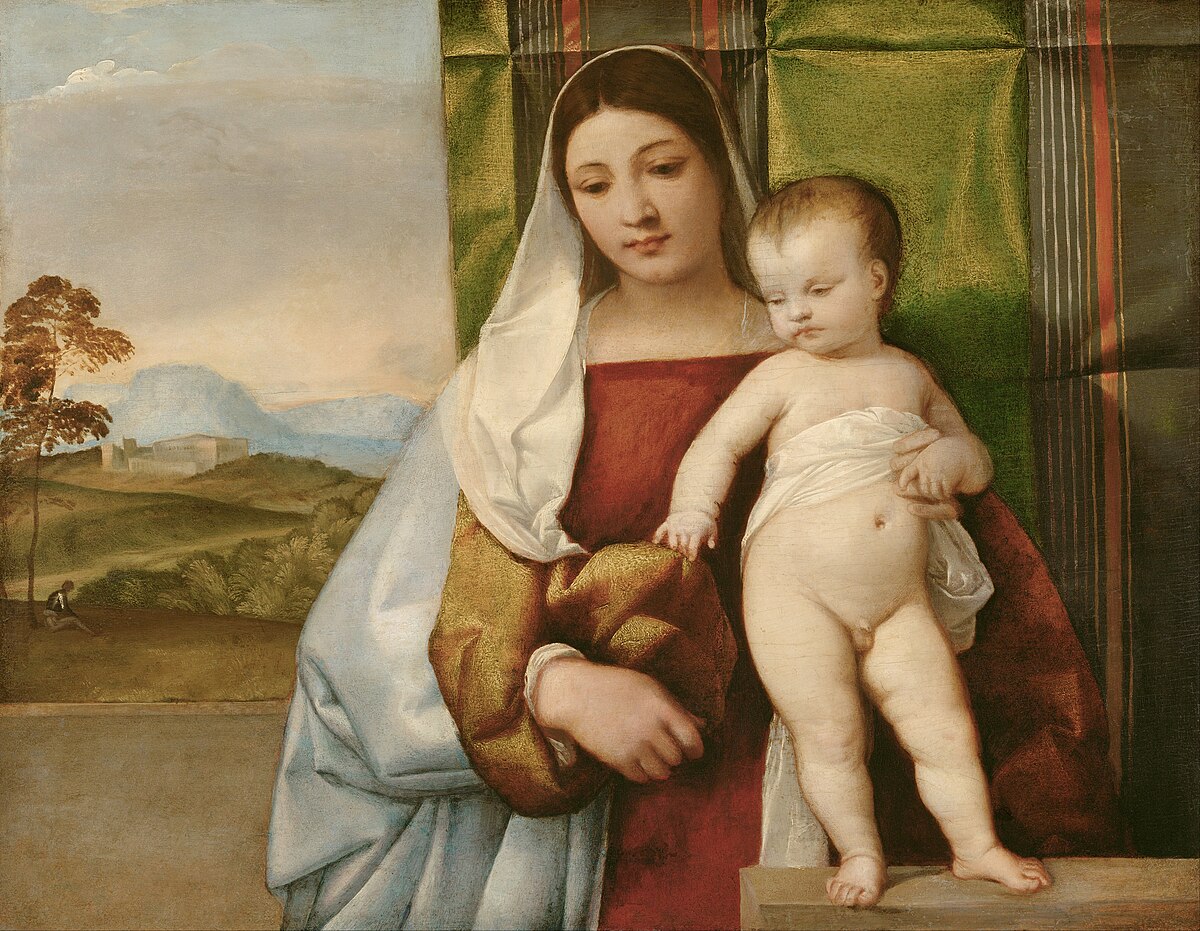
Titian executed this devotional altarpiece around 1510, showing the Madonna and Child enthroned between Saints Anthony of Padua and Roch. Both saints had special significance for communities threatened by plague: Anthony was invoked against pestilence, while Roch was believed to protect against the disease that had left its mark on his own body. Their presence suggests the painting may have been commissioned during an outbreak.
The work belongs to Titian's early period when Giorgione's influence remained strong. The warm Venetian color and atmospheric softness connect it to the poetic naturalism that defined early sixteenth-century Venice. The pyramidal composition groups the figures into a stable, harmonious arrangement, with Mary and the Christ child at the apex and the saints flanking them below.
Titian would develop far beyond this relatively conventional devotional format, eventually becoming the most sought-after painter in Europe. But early works like this demonstrate his mastery of traditional forms before he began pushing boundaries. The painting now hangs at the Museo del Prado in Madrid, part of the extraordinary collection of Venetian painting that Spanish monarchs assembled through Habsburg family connections and royal patronage.