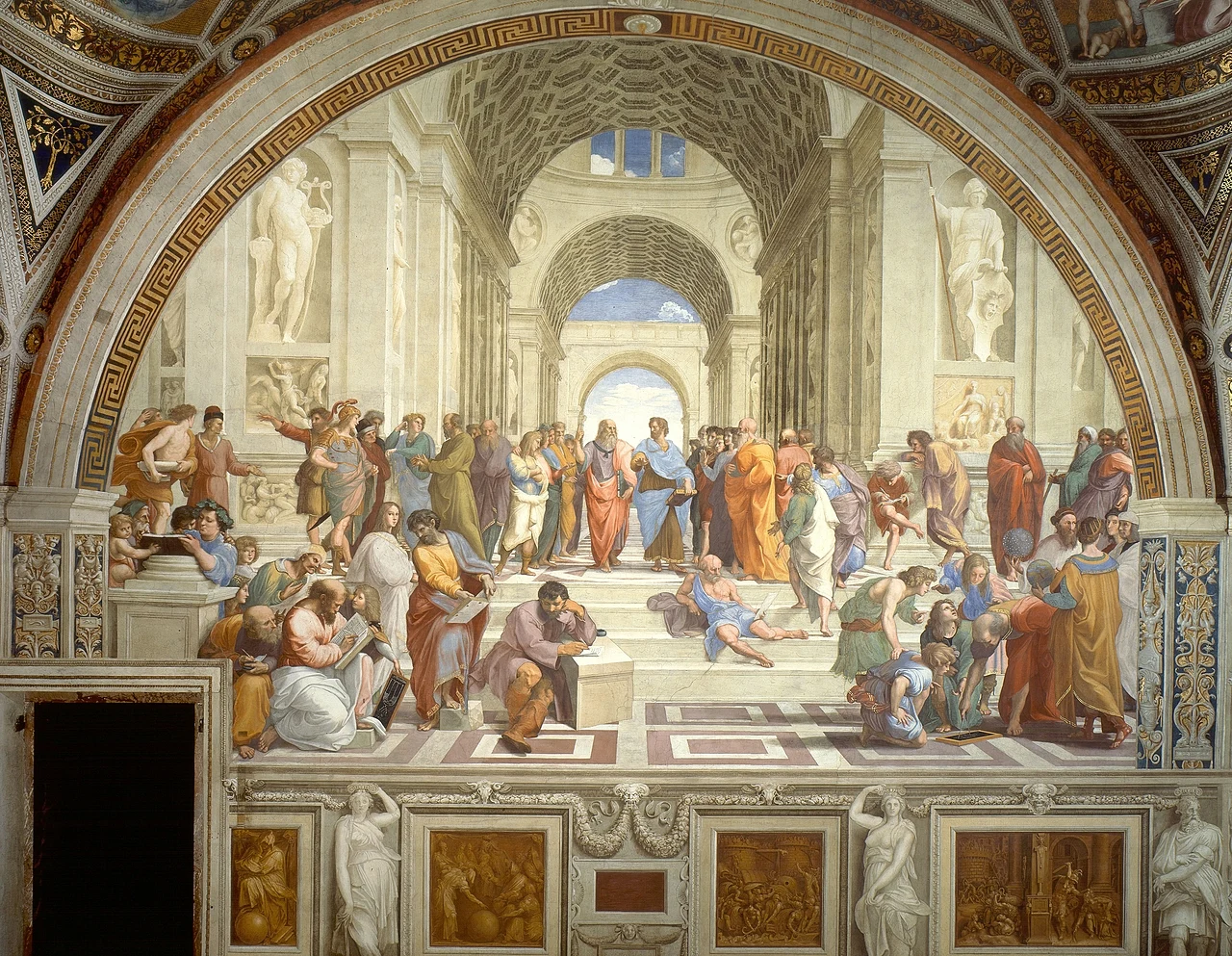
The School of Athens
by Raphael, 1511
Details
- Year
- 1511
- Medium
- Fresco
- Size
- 500 cm × 770 cm
- Gallery
- Raphael Rooms
Raphael painted The School of Athens around 1511 for the private library of Pope Julius II, creating an idealized gathering of history's greatest philosophers and scientists. At the center, Plato points upward toward the world of ideas while Aristotle gestures toward the earth of empirical observation. Around them, Pythagoras, Euclid, Ptolemy, and dozens of other thinkers engage in discussion beneath magnificent Renaissance architecture.
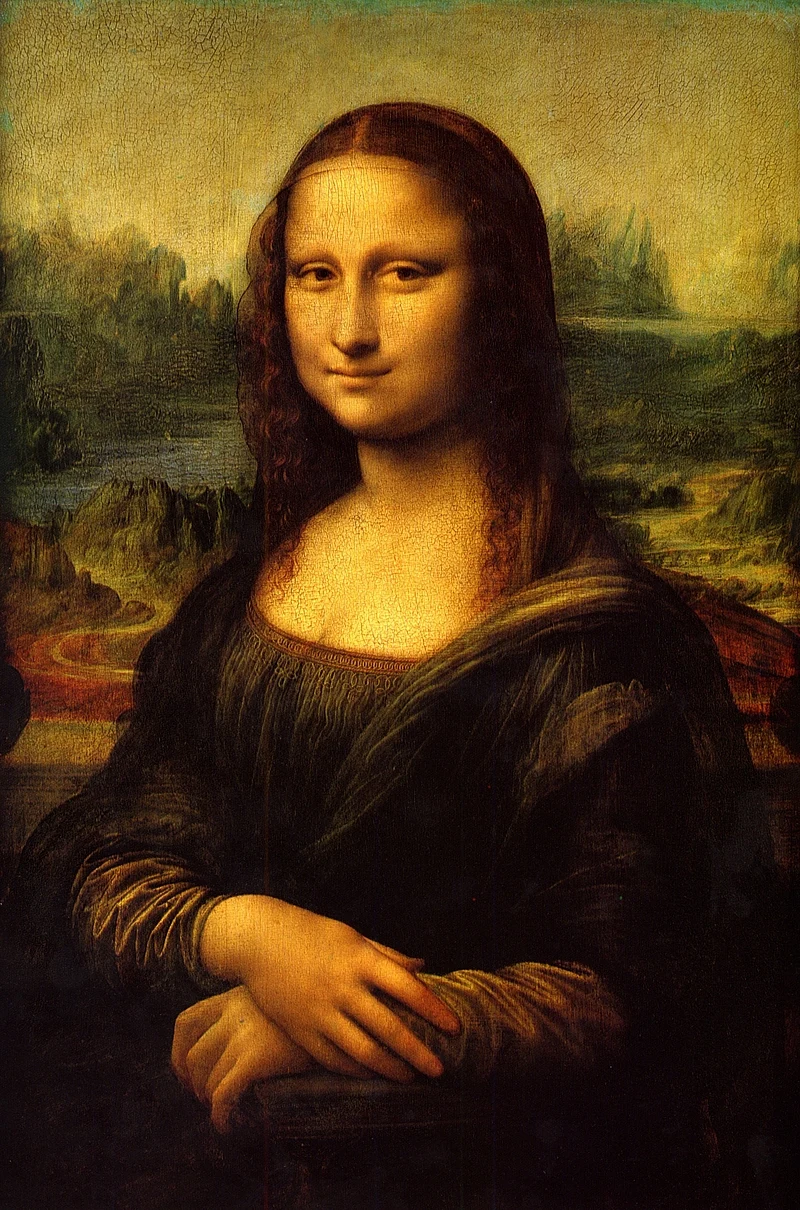
Raphael included contemporary portraits among the ancient philosophers. Plato's features are modeled on Leonardo da Vinci. The brooding figure of Heraclitus in the foreground, added later, bears the face of Michelangelo, then working on the Sistine ceiling nearby. Raphael painted himself at the far right edge, looking out at the viewer.
The painting exemplifies the High Renaissance ideal of harmonious composition. Every figure finds its place within the balanced whole, the architecture creates convincing depth, and the gathering of pagan philosophers in a papal room celebrates the compatibility of classical wisdom and Christian faith. It remains in its original location at the Vatican Museums.
Historical Significance
Considered Raphael's masterpiece and one of the most significant works of the High Renaissance.