The Night Watch
by Rembrandt van Rijn, 1642
Details
- Year
- 1642
- Medium
- Oil on canvas
- Size
- 363 cm × 437 cm
- Gallery
- Gallery of Honour
Estimated Value
$500M
Expert estimate
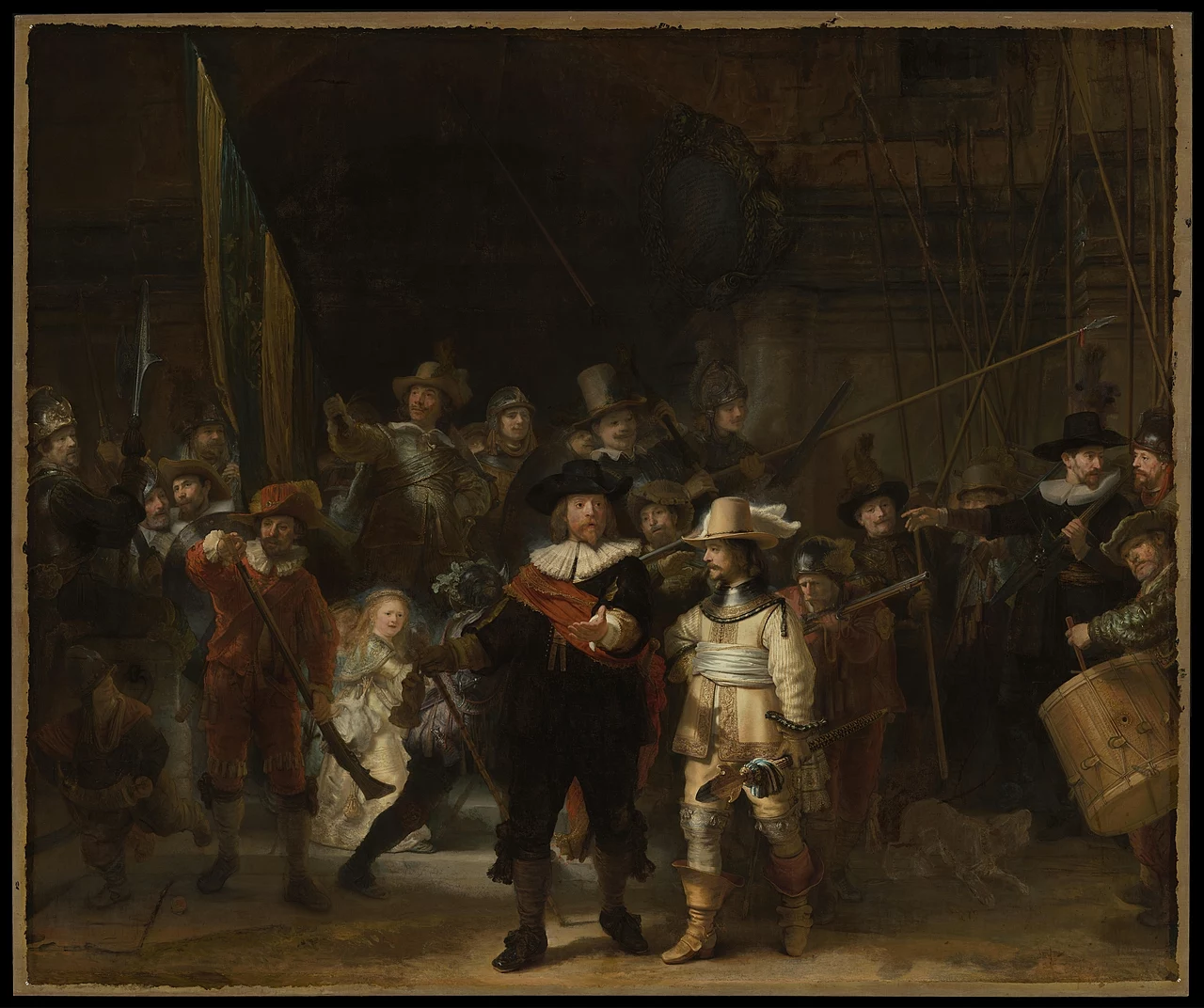
Rembrandt van Rijn painted The Night Watch in 1642 for the Amsterdam civic guard, transforming what should have been a routine group portrait into one of the most dramatic paintings of the Dutch Golden Age. The captain and his lieutenant stride forward from shadow into light, their company assembling in apparent chaos around them. The title is actually a misnomer: the scene takes place in daylight, but centuries of accumulated varnish darkened it until restoration revealed the original colors.
What made the painting radical was Rembrandt's decision to show the militia in action rather than posed in neat rows. Figures load muskets, wave flags, and jostle for position. A small girl in golden dress appears mysteriously at center, her significance still debated. The theatrical lighting picks out faces and hands against deep shadow, creating a sense of movement and spontaneity unprecedented in group portraiture.
The painting was trimmed on all sides in 1715 to fit a new location, removing several figures from the original composition. Despite this mutilation, it remains the centerpiece of the Rijksmuseum in Amsterdam, displayed in its own gallery where visitors can study Rembrandt's virtuoso brushwork up close.
Historical Significance
Rembrandt's most famous painting, revolutionary for its use of light and movement in group portraiture.