Las Meninas
by Diego Velázquez, 1656
Details
- Year
- 1656
- Medium
- Oil on canvas
- Size
- 318 cm × 276 cm
- Gallery
- Room 12
Estimated Value
$400M
Expert estimate
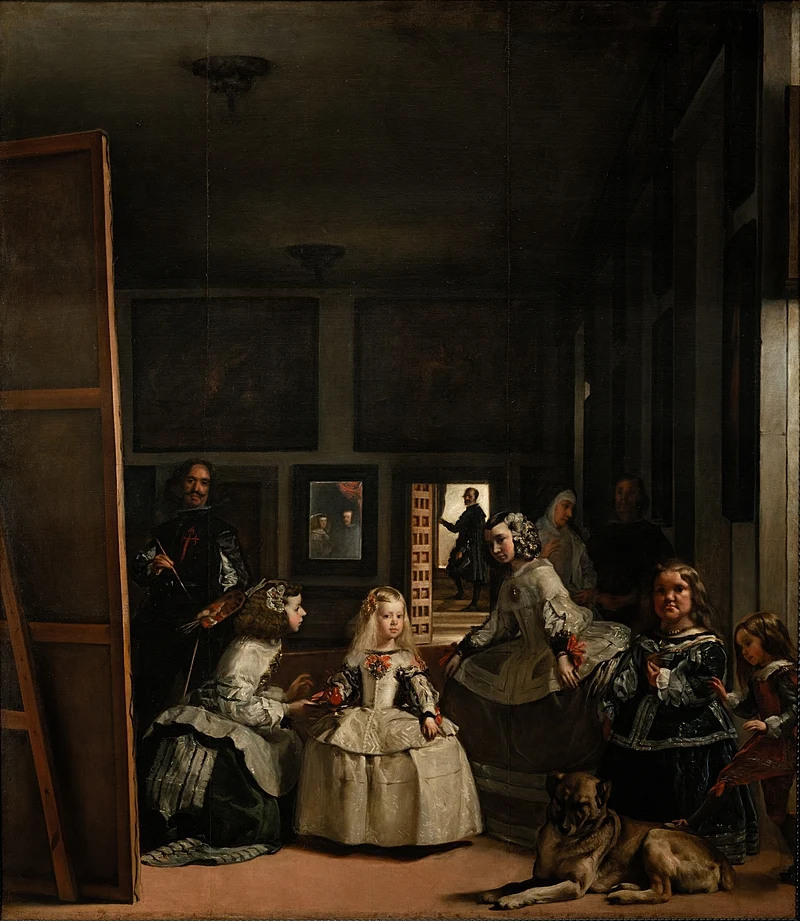
Diego Velázquez completed this Las Meninas in 1656, creating what many consider the most analyzed painting in Western art. The five-year-old Infanta Margarita stands at center, attended by her maids of honor (meninas), a dwarf, a dog, and other court figures. Velázquez himself appears at a large canvas on the left, brush in hand, looking directly at us. In the background, a mirror reflects the king and queen, who seem to occupy the space where we stand.
The painting's complexity lies in its ambiguity. Who is the subject? The princess? The royal couple in the mirror? The viewer being painted? Velázquez collapsed the boundaries between painter, subject, and audience in ways that philosophers from Foucault to art historians have debated for centuries. The Baroque master used loose, visible brushwork that dissolves into abstraction up close but resolves into startling realism from a distance.
Velázquez served as court painter to Philip IV of Spain for nearly four decades. Las Meninas hung in the king's private office, where only select visitors could see it. Today it occupies a central room at Museo del Prado in Madrid, where it remains Spain's most treasured painting.
Historical Significance
Considered one of the most analyzed works in Western art history for its complex composition.