Wikimedia Commons • Public Domain
The Apostle Paul
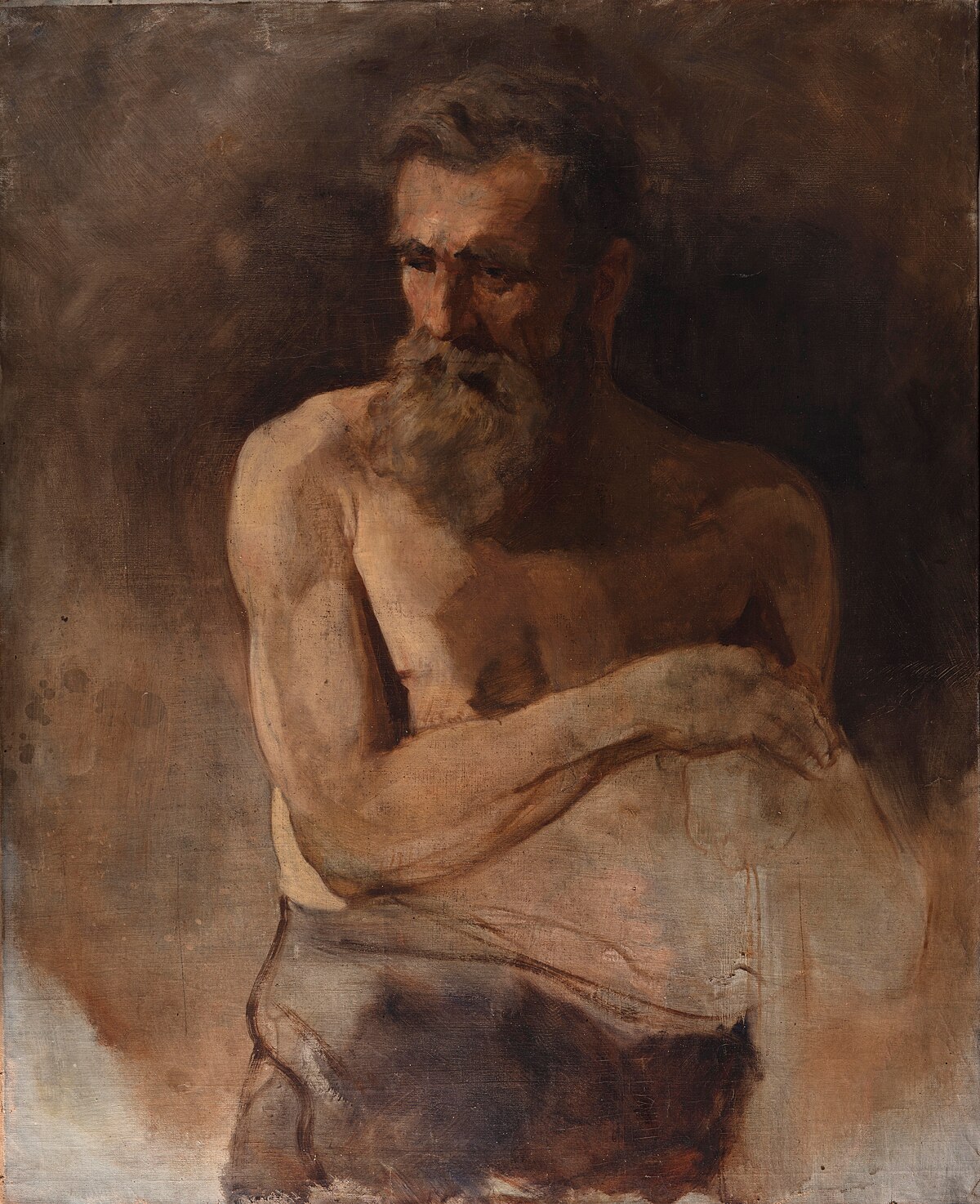
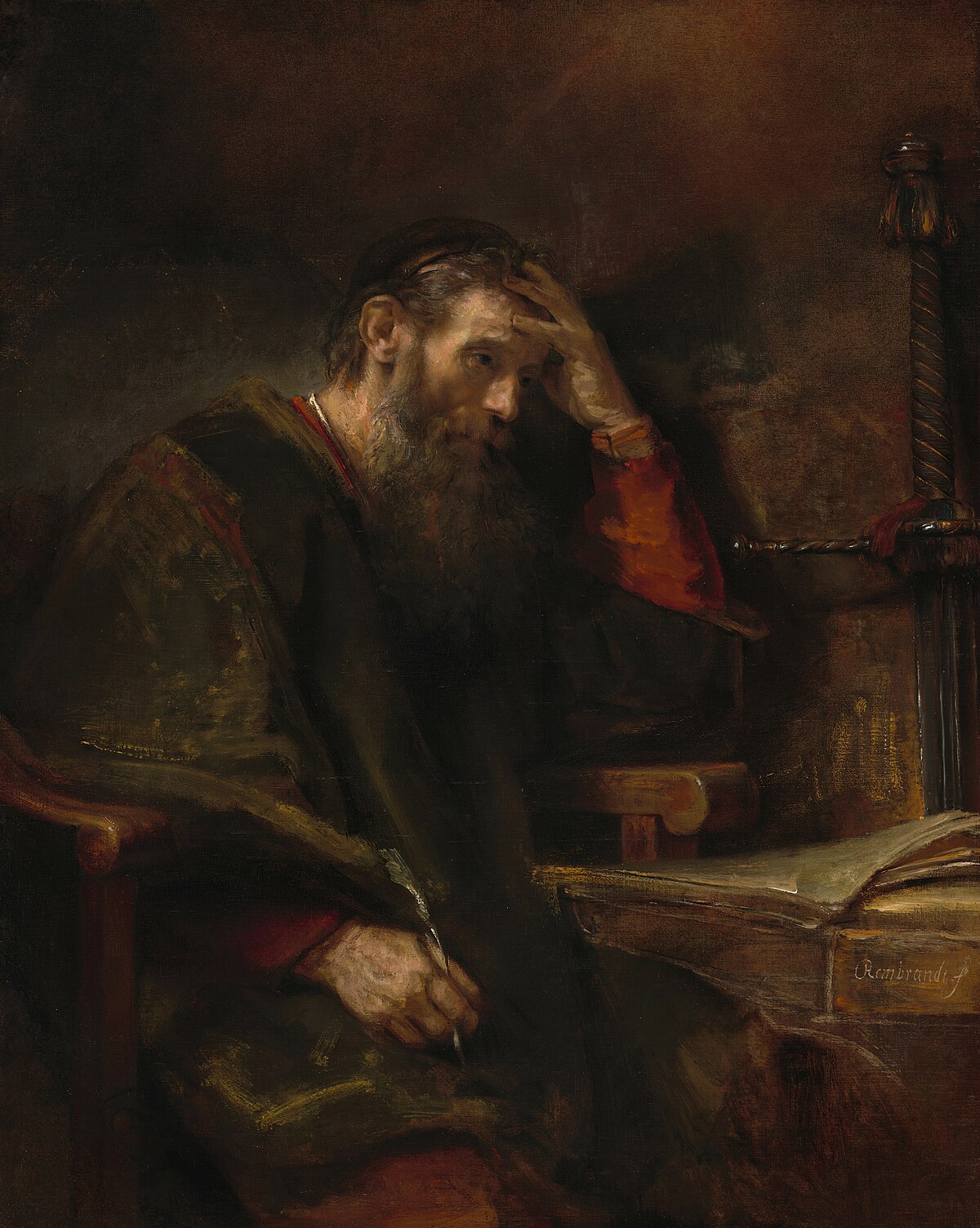
Rembrandt van Rijn painted The Apostle Paul around 1657, showing the saint in prison pondering the epistles he wrote to early Christian communities. Paul sits in shadow, his face emerging from darkness, a manuscript before him and a sword visible at his side. The sword symbolizes both his martyrdom (he was beheaded in Rome) and his description of Scripture as the "sword of the Spirit."
This painting belongs to Rembrandt's late period, when he increasingly simplified his compositions and suppressed surface detail in favor of psychological depth. The rough, almost unfinished appearance of the paint handling intensifies rather than diminishes the emotional impact. Paul appears lost in thought, wrestling with ideas that would shape Christianity for millennia.
X-ray analysis reveals that Rembrandt transformed this work from a scholar portrait into a religious painting, adding the sword and adjusting the figure's identity during the painting process. Such changes were common in his practice. The work now hangs at the National Gallery of Art in Washington, D.C., representing Rembrandt's ability to convey spiritual contemplation through paint.