Wikimedia Commons • Public Domain
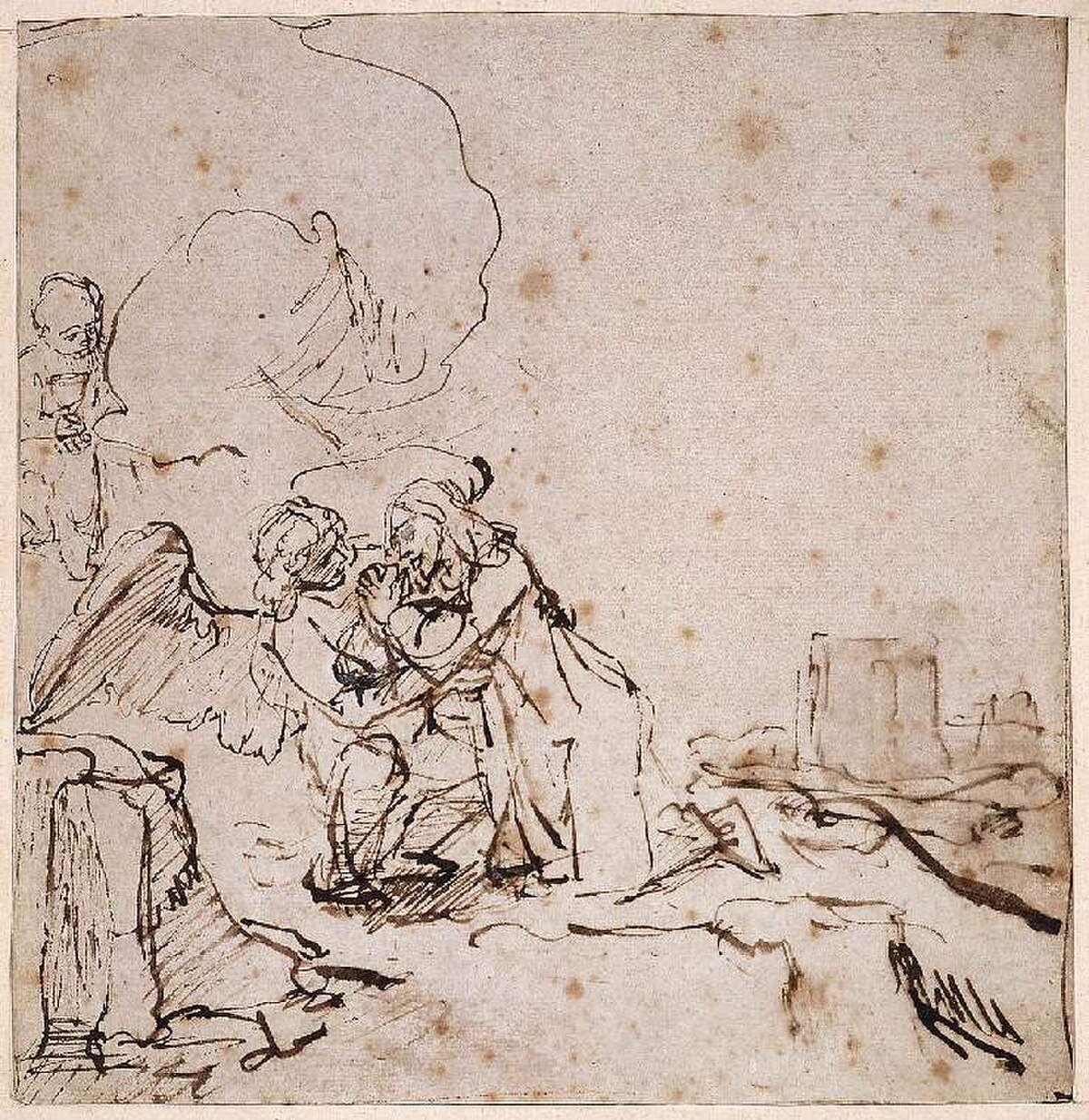
The Agony in the Garden
Rembrandt van Rijn painted the scene of Christ's agony in the Garden of Gethsemane around 1657, depicting the moment before his arrest when Jesus prayed for the cup of suffering to pass from him. An angel descends bearing that symbolic cup while the disciples Peter, James, and John sleep nearby, unaware of the anguish their master endures.
The painting demonstrates Rembrandt's mastery of dramatic chiaroscuro. Christ kneels in a pool of supernatural light emanating from the angel, while darkness envelops everything else. The sleeping disciples huddle in shadow, their obliviousness contrasting with Jesus's wakeful suffering. This use of light to convey spiritual meaning was central to Rembrandt's religious paintings throughout his career.
The work belongs to Rembrandt's late period, when his technique became increasingly loose and his psychological depth intensified. Rather than depicting the scene with theatrical drama, he emphasizes the solitary weight of Christ's decision to accept his fate. The moment feels intimate rather than spectacular. The painting now hangs at the National Gallery in London, where it represents Rembrandt's profound approach to biblical subjects.