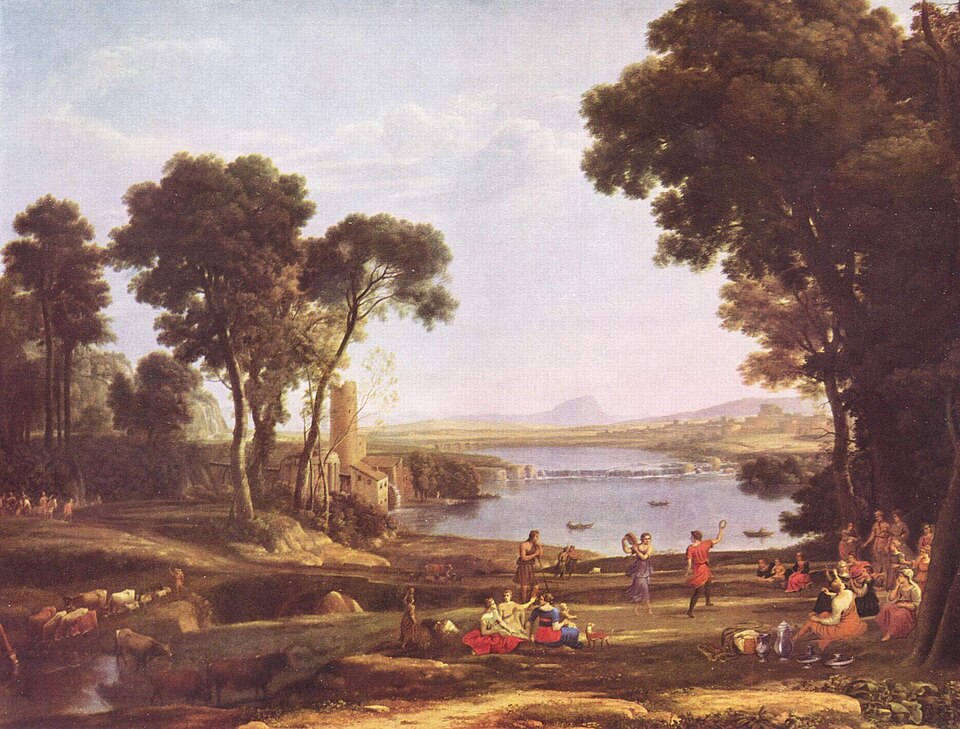
Landscape with the Marriage of Isaac and Rebecca
by Claude Lorrain, 1648
Details
- Year
- 1648
- Medium
- Oil on canvas
- Size
- 152.3 cm × 200.6 cm
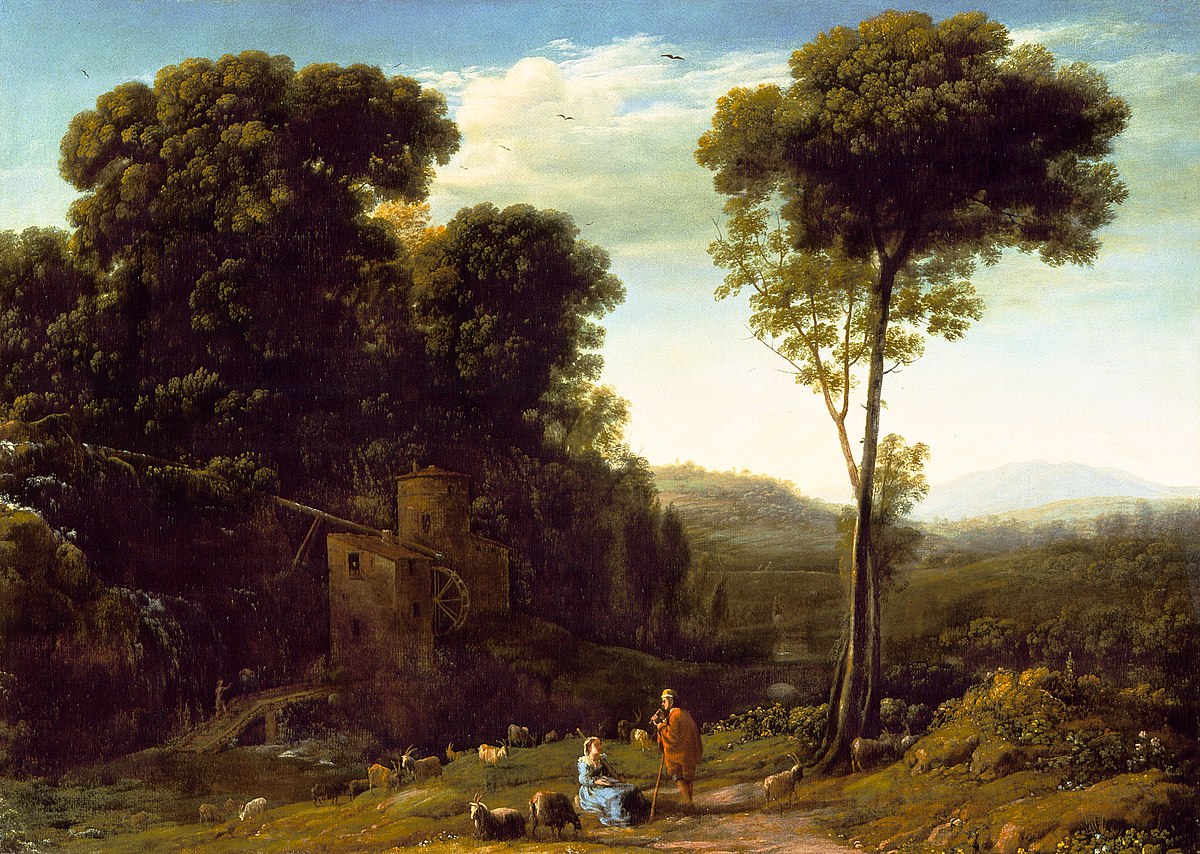
French artist Claude Lorrain painted this idealized landscape in 1648 as one of a pair commissioned by Frédéric-Maurice, Duc de Bouillon. The scene shows the marriage celebration of Isaac and Rebecca from Genesis, with couples dancing amid pastoral beauty. A mill and distant town appear beneath a luminous sky.
Claude spent most of his life in Rome, but his landscapes don't depict specific places. He synthesized memories of the Italian countryside into perfect visions of nature bathed in golden light. It is also called "The Mill" for the water mill at left, a motif Claude returned to throughout his career.
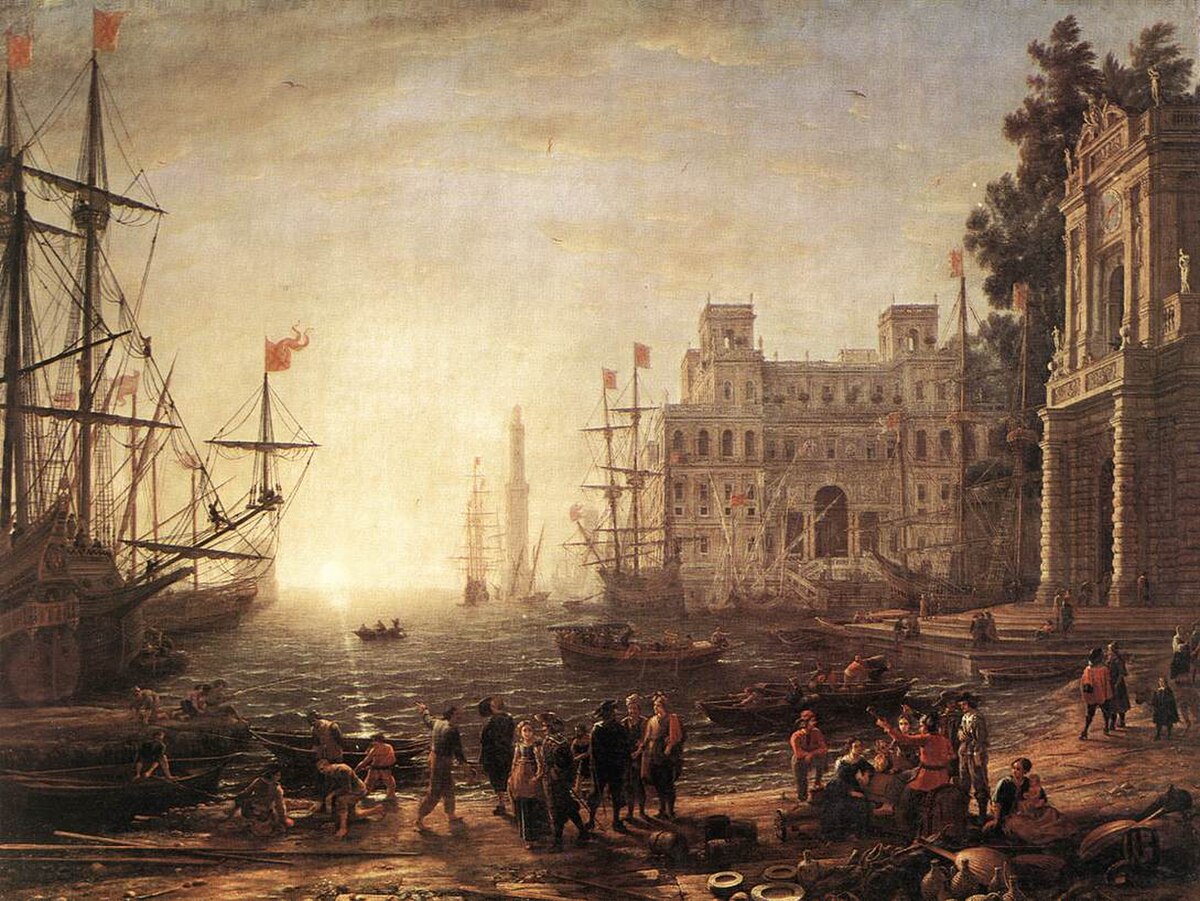
The painting and its pair, Seaport with the Embarkation of the Queen of Sheba, remained together in the Bouillon family for over a century, even surviving seizure during the French Revolution. They became among the first paintings purchased for the National Gallery in London in 1824. J.M.W. Turner so admired them that he bequeathed two of his own paintings to the nation on condition they hang beside Claude's pair.