Wikimedia Commons • Public Domain
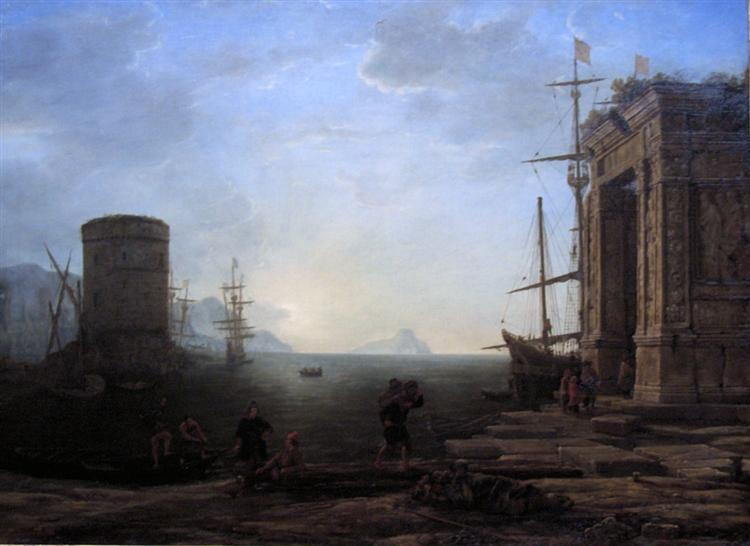
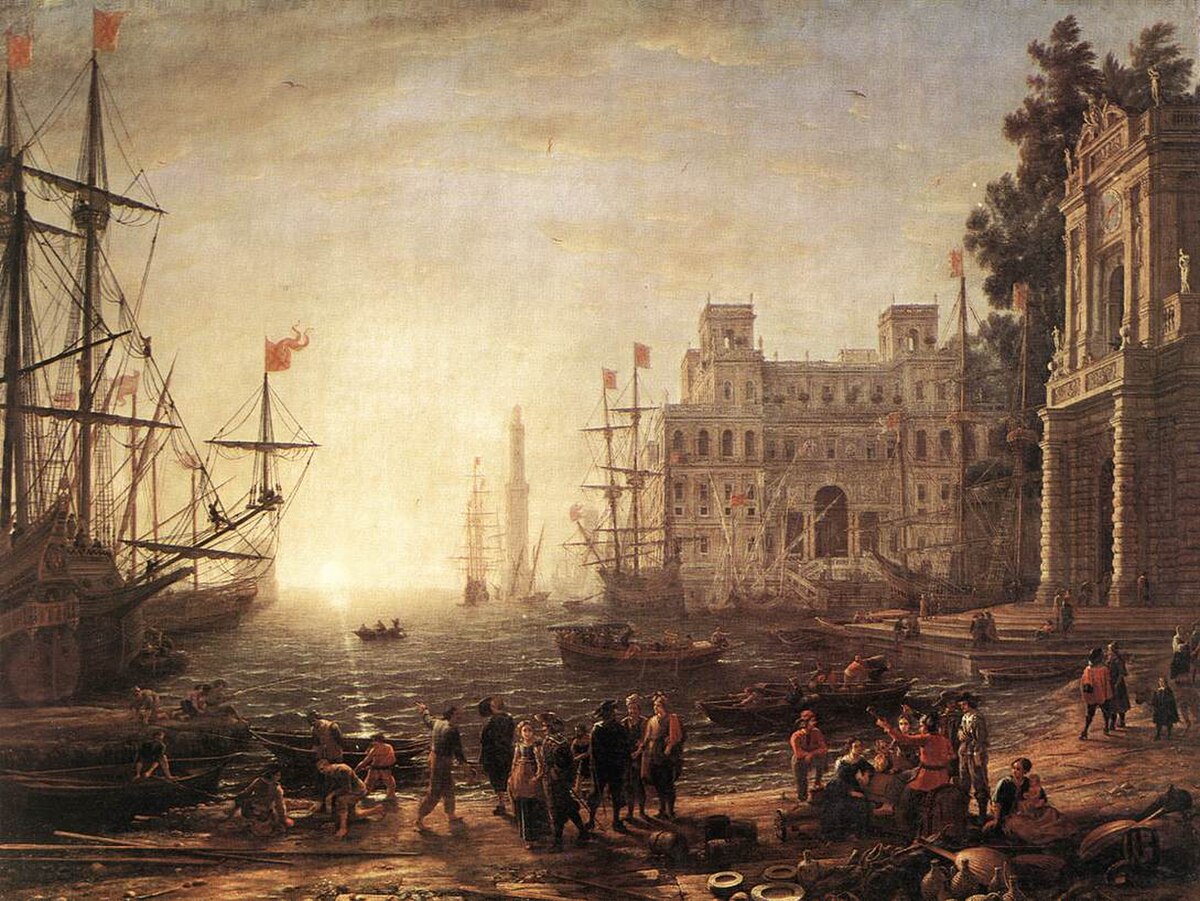
Harbour with Villa Medici
Claude Lorrain completed this imaginary seaport in 1637 for a cardinal of the Medici family. The Villa Medici appears in the background, though the artist took creative license by placing the hilltop Roman estate directly on the shore. Family coats of arms above the clock tower and on the ships identify the patron.
The likely client was Cardinal Giancarlo de' Medici, who commanded the Knights of St. Stephen's Mediterranean fleet during this period. Grand Duke Cosimo I de' Medici had founded the knightly order in 1562 to combat pirates and heretics in the Mediterranean, and Giancarlo's naval responsibilities explain the maritime setting.
The real Villa Medici sits on the Pincio hill in Rome, not by any harbor. Cardinal Ferdinando de' Medici acquired and expanded the property in 1576, filling it with ancient sculptures including the famous Medici Venus, the Knife Grinder, and the Wrestlers. Some of these classical pieces appear depicted on the building's facade in the painting. The sculptures later moved to Florence, and Napoleon eventually made the villa the seat of the Académie de France. Today this painting hangs at the Uffizi Gallery in Florence.