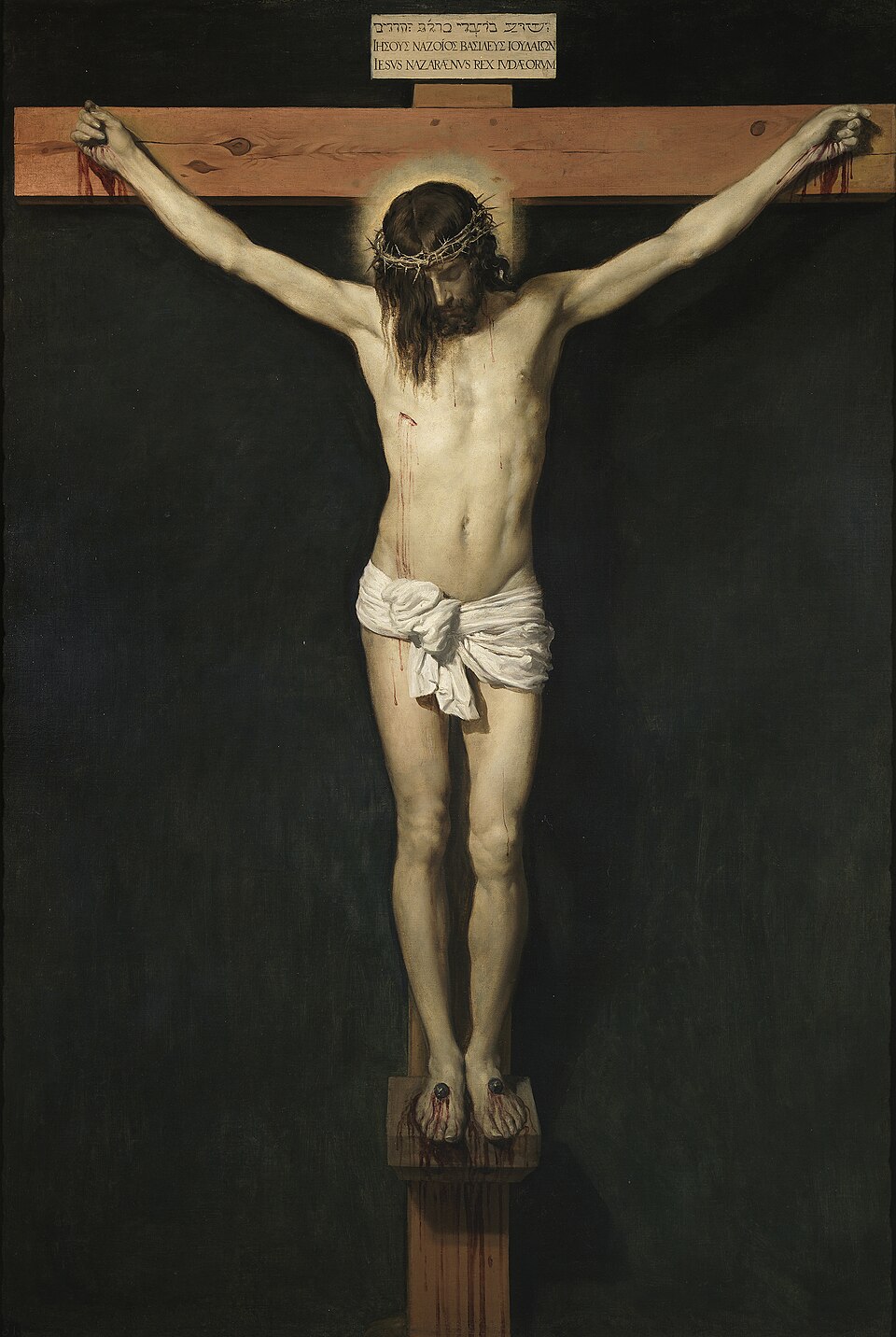
Christ Crucified
by Diego Velázquez, 1632
Details
- Year
- 1632
- Medium
- Oil on canvas
- Size
- 248 cm × 169 cm (97.6 × 66.5 in)
Working in oil on canvas, Diego Velázquez painted this crucifixion around 1632 for the San Plácido convent in Madrid. Christ hangs against a black background, his body still composed, his head bowed in death. Four nails pin him to the cross, following a medieval tradition of separate nails for each foot.
The painting shows dignified suffering rather than graphic agony. Christ's body is idealized but anatomically convincing, lit from the left with subtle modeling. No onlookers, no landscape, no drama: just a solitary figure against darkness. This stark simplicity intensifies the emotional impact.
Spanish poet Miguel de Unamuno wrote a famous meditation on this image. The Prado displays it as one of the most profound religious paintings in Spanish art.