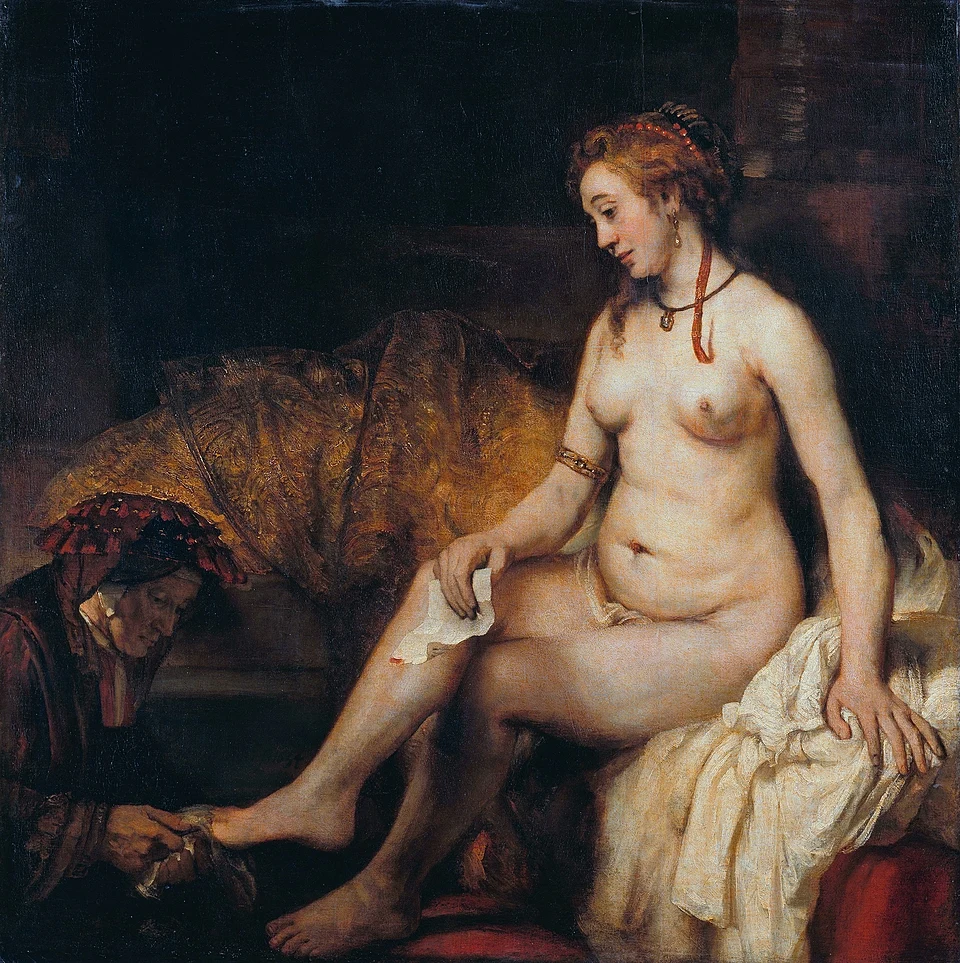
Bathsheba at Her Bath
by Rembrandt van Rijn, 1654
Details
- Year
- 1654
- Medium
- Oil on canvas
- Size
- 142 cm × 142 cm
Rembrandt rendered this Bathsheba at Her Bath in 1654, one of his most psychologically complex nudes. The scene comes from the Old Testament: King David spies Bathsheba bathing and summons her to his bed, setting off a chain of adultery and murder. But Rembrandt chose an unusual moment. Bathsheba holds David's letter, her expression troubled as she contemplates obeying a king or staying faithful to her soldier husband.
The model was likely Hendrickje Stoffels, Rembrandt's companion after his wife Saskia died. The same year this was painted, Hendrickje was called before the church council for "living in sin" with the artist. Their daughter Cornelia was born that year too. These real-life tensions may inform the painting's emotional weight.
X-rays reveal Rembrandt reworked the composition extensively. He originally painted Bathsheba looking sideways, perhaps watching David. In the final version her gaze drops, deepening her private anguish. The painting measures 142 by 142 centimeters and hangs at the Louvre, where art historian Simon Schama called it "the first depiction of a woman thinking."