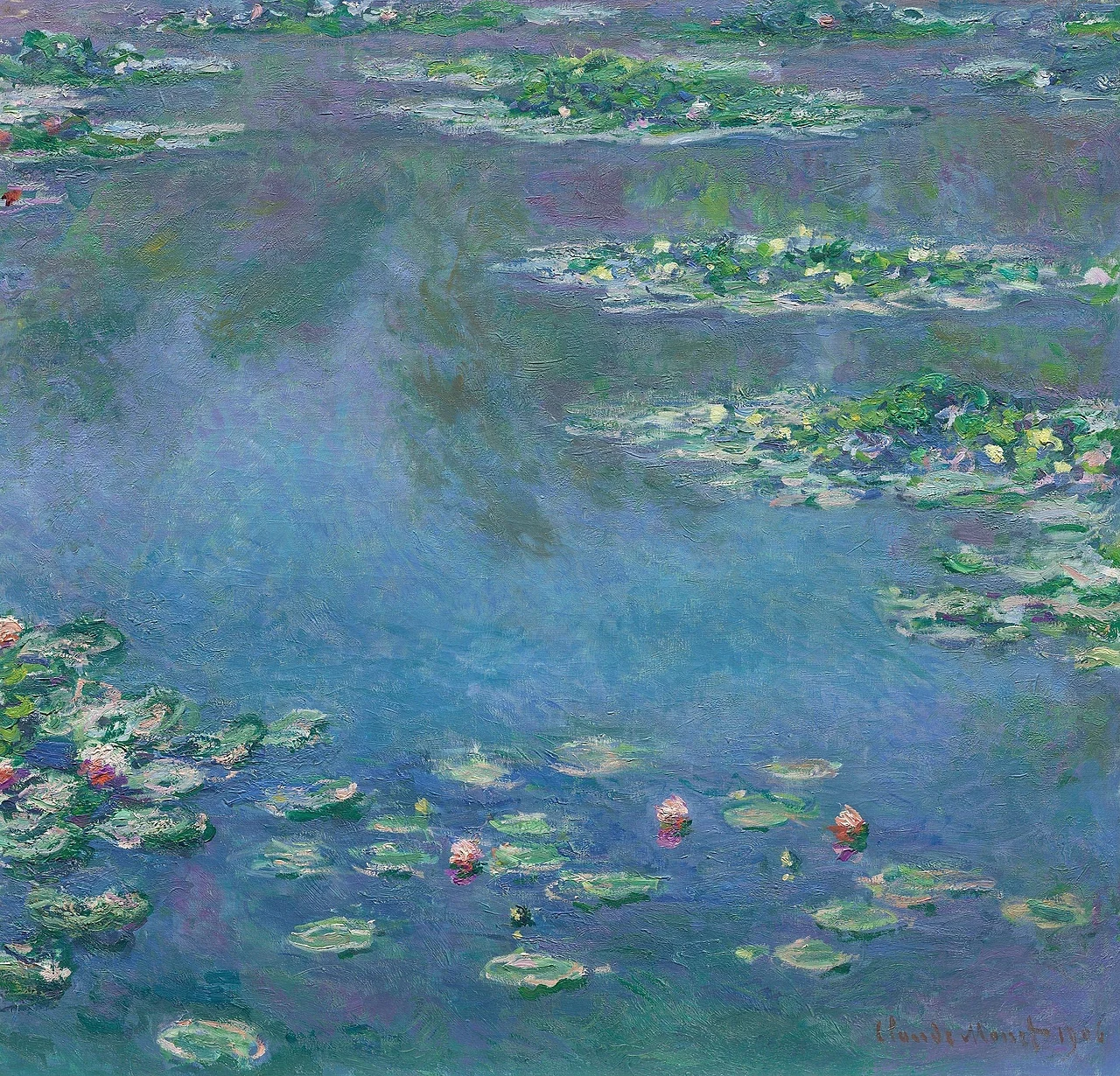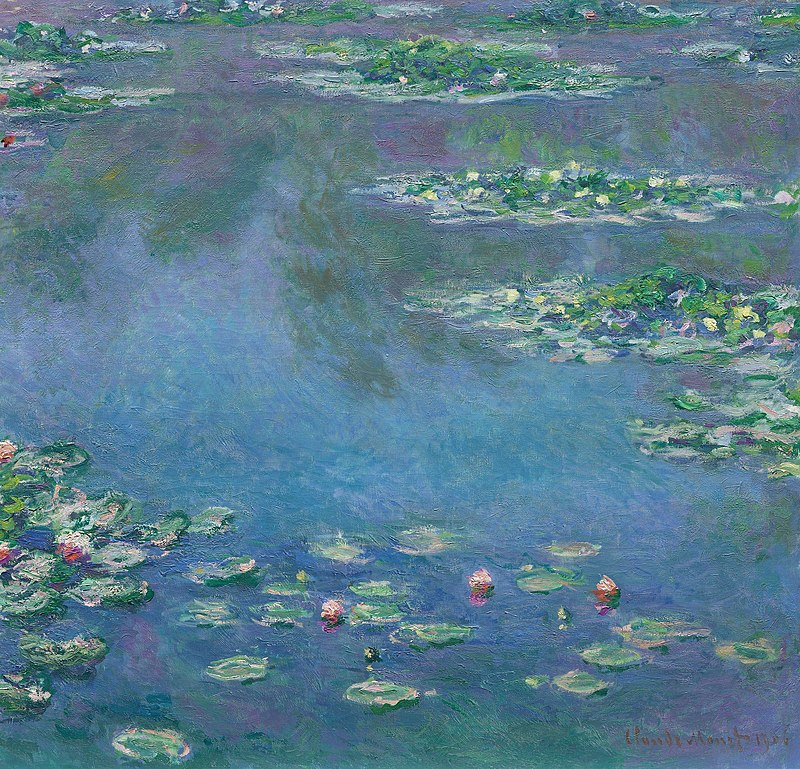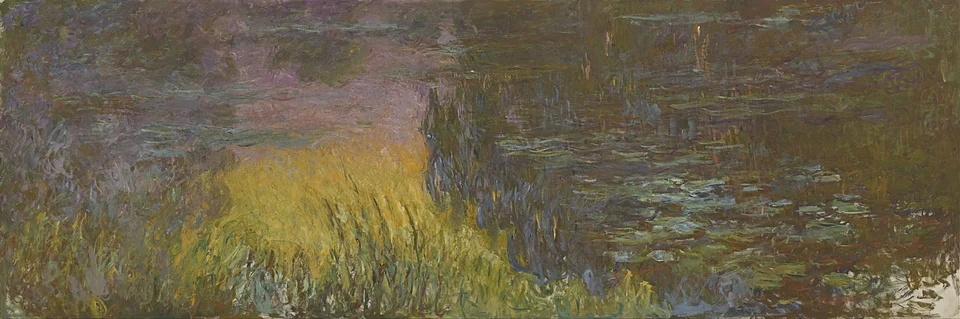
Water Lilies (Nymphéas)
by Claude Monet, 1926
Details
- Year
- 1926
- Medium
- Oil on canvas
- Size
- Various panels
Claude Monet spent three decades, from the 1890s until his death in 1926, creating his Water Lilies series. The eight monumental panels at the Musée de l'Orangerie in Paris represent the culmination of this obsessive project. Each panel stands 2 meters tall, and together they span 91 meters across two oval rooms.
Monet donated these works to France as a symbol of peace the day after the Armistice of November 11, 1918. He worked closely with architect Camille Lefèvre to design the display space, which forms the shape of an infinity symbol. Natural skylights illuminate the paintings as Monet intended, with sunrise scenes facing east and sunset scenes facing west.
The installation covers 200 square meters of painted surface. André Masson called it the "Sistine Chapel of Impressionism" in 1952. Monet drew inspiration from his water garden at Giverny, where he cultivated water lilies specifically for his paintings.