Wikimedia Commons • Public Domain
Lola de Valence
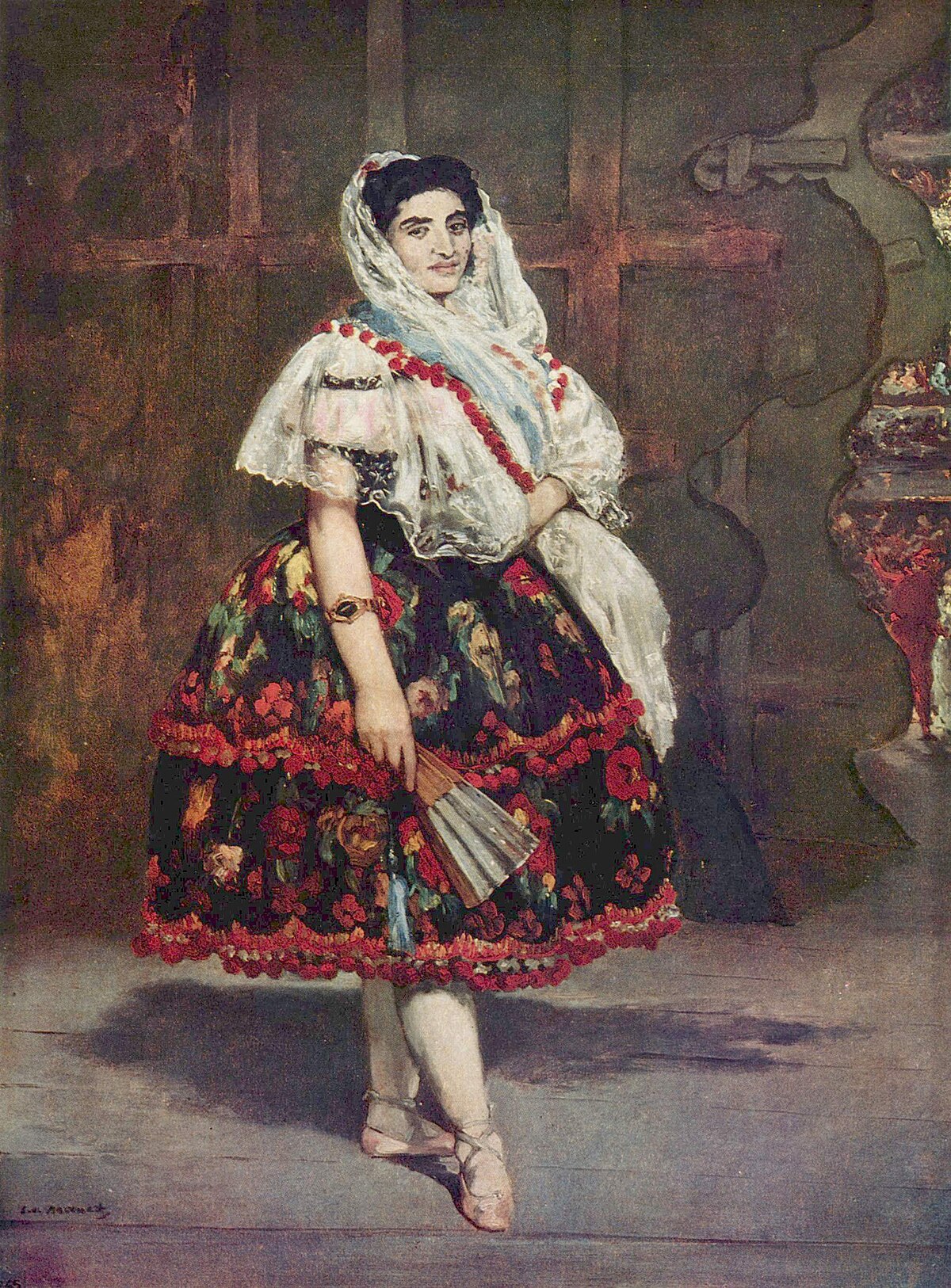
Édouard Manet painted this portrait of the Spanish dancer Lola Meléa in 1862, capturing her during performances with the Royal Spanish Ballet troupe that visited Paris that year. She stands in full costume with her fan, poised between movements, the stage scenery visible behind her. The painting combines portrait and theatrical performance in a composition that feels both posed and spontaneous.
The poet Charles Baudelaire was so taken with the painting that he wrote a quatrain for it, describing Lola as possessing "the unexpected charm of a pink and black jewel." When Manet included this poem on the frame, the combination of sensuous image and provocative verse caused scandal. The work appeared at the Salon des Refusés in 1863, the famous exhibition of rejected paintings that marked a turning point in French art.
Lola de Valence captures Manet's ongoing fascination with Spanish culture and his ability to transform contemporary subjects into striking artistic statements. The bold contrasts and visible brushwork anticipate his mature style. The painting now hangs at the Musée d'Orsay in Paris, where it represents both Manet's Spanish period and his friendship with Baudelaire.