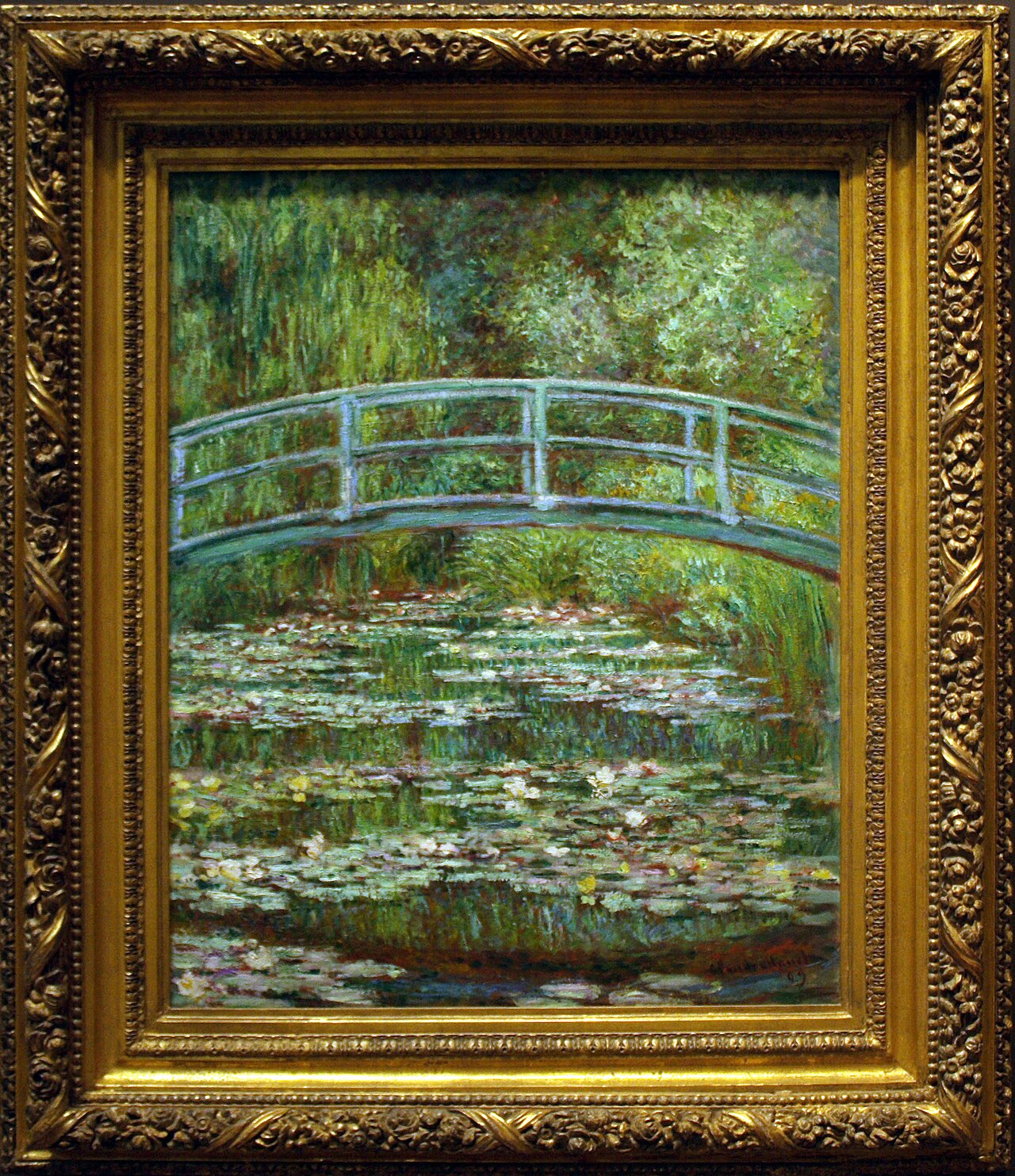
Bridge over a Pond of Water Lilies
by Claude Monet, 1899
Details
- Year
- 1899
- Medium
- Oil on canvas
- Size
- 92.7 cm × 73.7 cm
Claude Monet painted the Bridge over a Pond of Water Lilies in 1899 at his home in Giverny, France. Six years earlier he'd purchased a marshy plot across the railroad tracks from his house and transformed it into a water garden. The Japanese-style footbridge became one of his favorite subjects.
That summer Monet painted eighteen views of the bridge from a single vantage point. This vertical composition gives extra prominence to the water lilies and their reflections. The pale turquoise bridge arcs across the upper third of the canvas, its shadows rendered in soft purple. Tall grasses and willows frame the edges.
The painting measures 92.7 by 73.7 centimeters and hangs at The Metropolitan Museum of Art in New York. It came to the Met through the H.O. Havemeyer Collection in 1929. Monet would return to his water garden obsessively for the rest of his life, eventually producing around 250 water lily paintings.