Wikimedia Commons - CC BY-SA 4.0
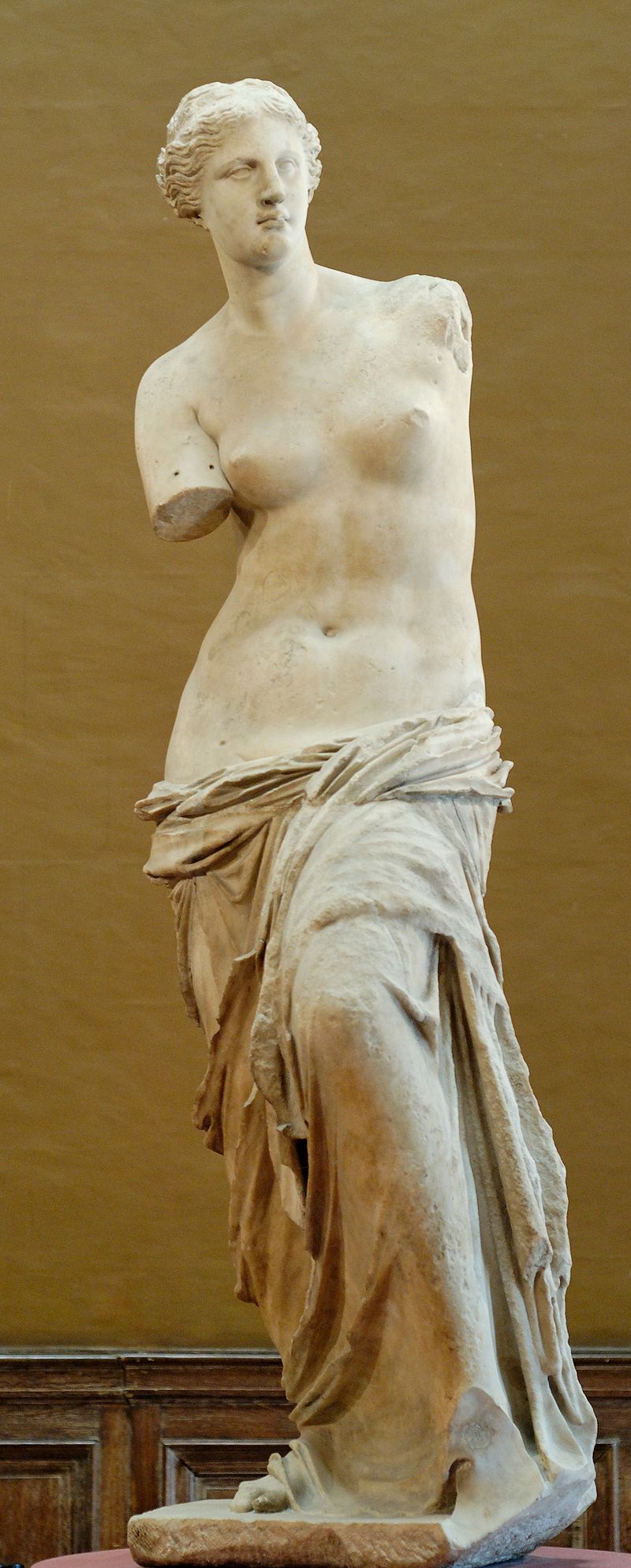
Venus de Milo
by Ancient Greek (Unknown), -100
Details
- Year
- -100
- Medium
- Marble
- Size
- 204 cm (6 ft 8 in) tall
The Venus de Milo, discovered in 1820 on the Greek island of Milos, represents either Aphrodite, goddess of love, or the sea goddess Amphitrite. Carved from Parian marble around 130–100 BCE by an unknown Ancient Greek sculptor, it combines an idealized upper body with a more naturalistic treatment of drapery pooling at the hips.
A Greek peasant found the statue in two main pieces on his land. French naval officers quickly negotiated its purchase and sent it to Paris as a gift for King Louis XVIII. The arms were already missing at discovery, sparking endless speculation about her original pose. Was she holding a mirror? An apple? The arms of a male companion?
The Louvre prominently displayed the Venus as a replacement for the Medici Venus, which Napoleon had been forced to return to Italy. She became a symbol of Classical Greek beauty, though the proportions are actually Hellenistic. The statue's fame was partly a matter of political timing: France needed a world-class classical sculpture, and the Venus arrived at exactly the right moment.