U
© Copyrighted Artwork
This artwork is protected by copyright. We cannot display images of works by artists who passed away after 1954.
See the original at Galleria Nazionale d'Arte Moderna e Contemporanea in Rome
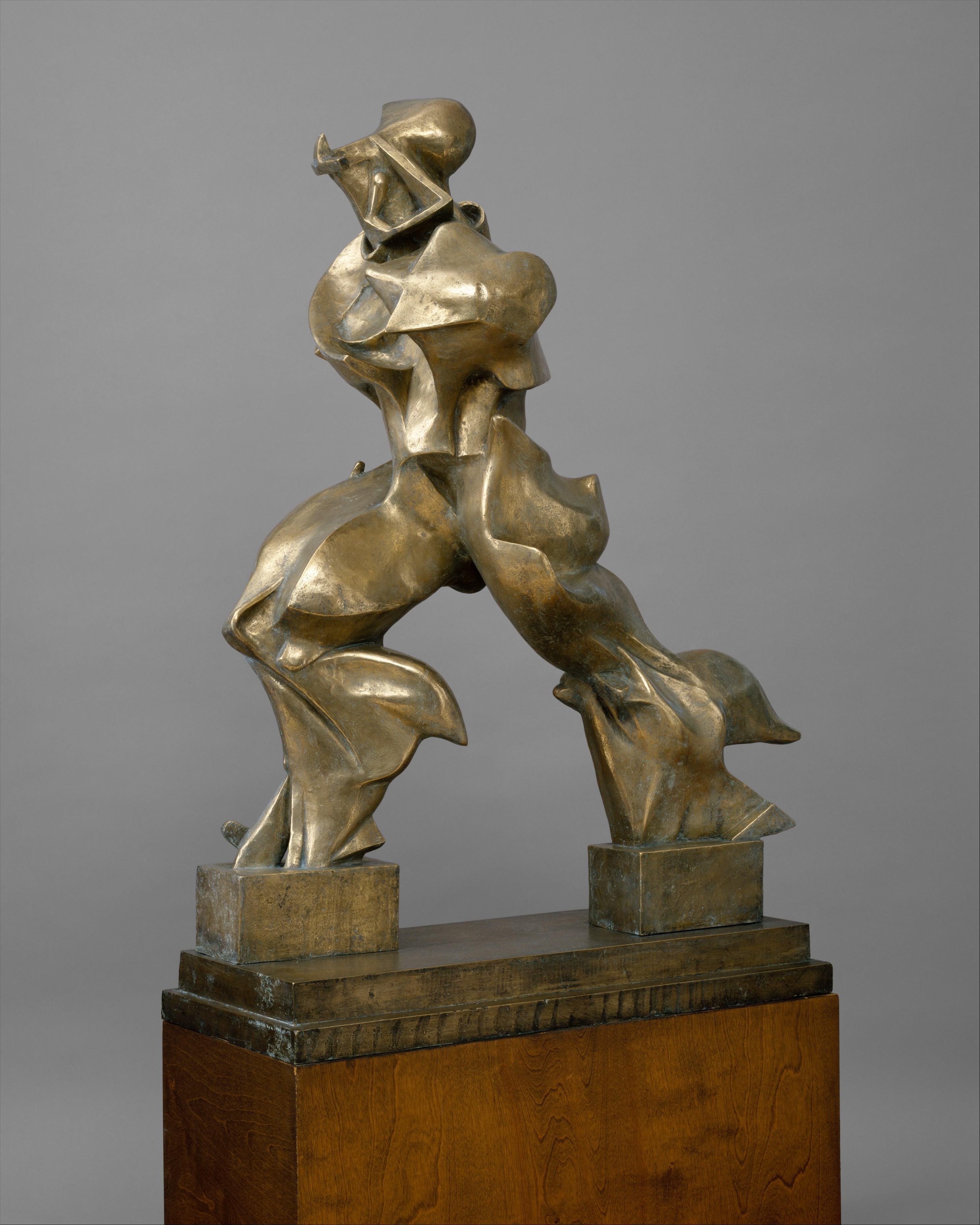
Unique Forms of Continuity in Space
by Umberto Boccioni, 1913
Details
- Year
- 1913
- Medium
- Bronze
- Size
- 121.3 cm × 88.9 cm × 40 cm
Working in bronze, Umberto Boccioni created this Unique Forms of Continuity in Space in 1913, producing the defining sculpture of the Italian Futurist movement. The bronze figure stands 111.2 cm tall and depicts a striding human form, its contours warped by wind and velocity. The original plaster resides in São Paulo, while bronze casts appear at MoMA, the Met, the Tate Modern, and the Galleria Nazionale d'Arte Moderna in Rome.
Boccioni published his Technical Manifesto of Futurist Sculpture in 1912, outlining how objects extend into space through motion. This work embodies that theory. The figure lacks arms and a recognizable face, reducing human anatomy to pure dynamic force. Two blocks anchor it to the ground while flame-like surfaces suggest the figure is reshaping the air around it.
The sculpture appears on the Italian 20-cent euro coin, selected in 1998 as a symbol of modern Italy. Boccioni never saw his work cast in bronze. He died in 1916 at age 33, thrown from a horse during World War I cavalry exercises. The first bronze casts appeared in 1931.