Wikimedia Commons • Public Domain
Mr. and Mrs. Andrews
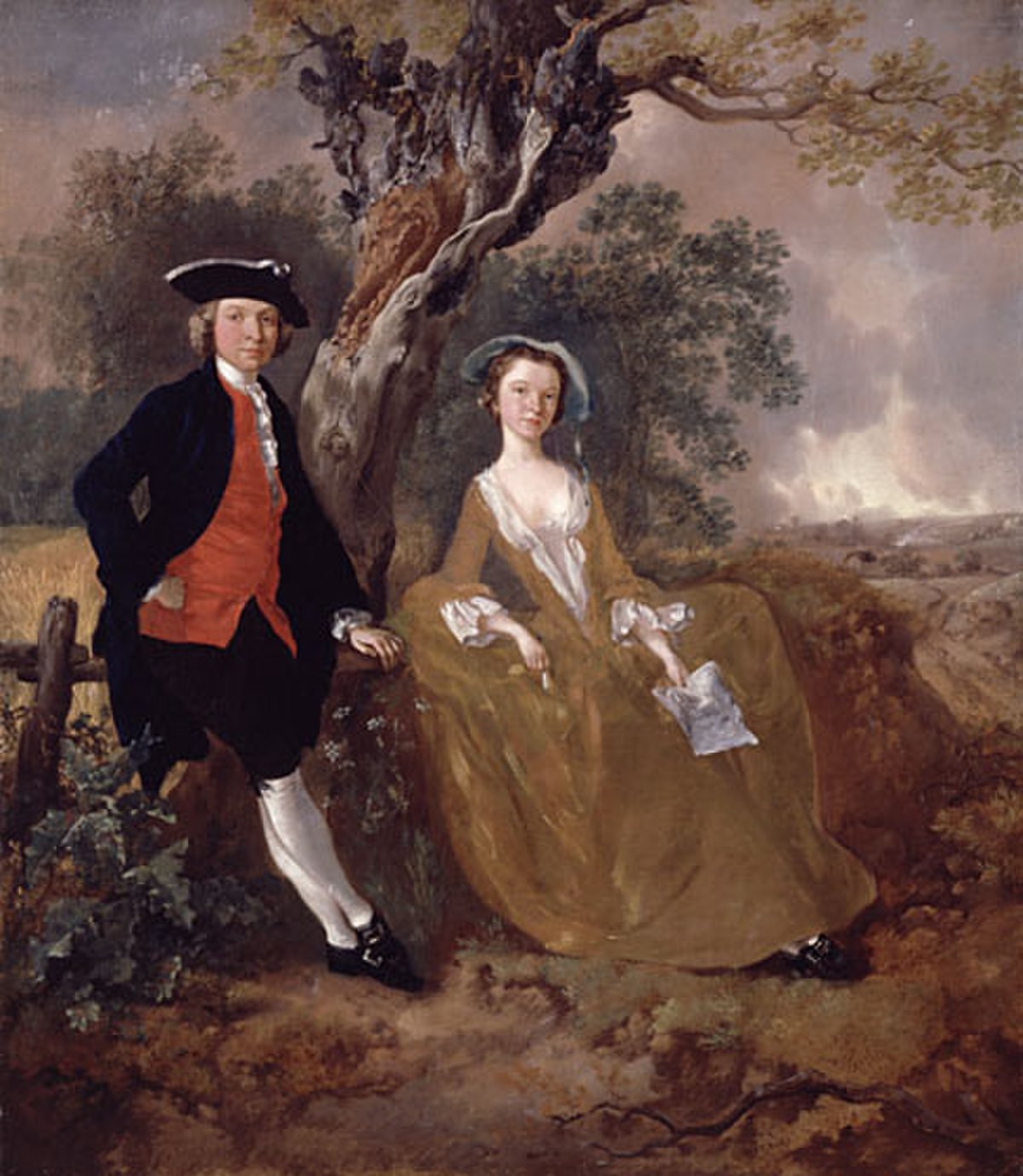
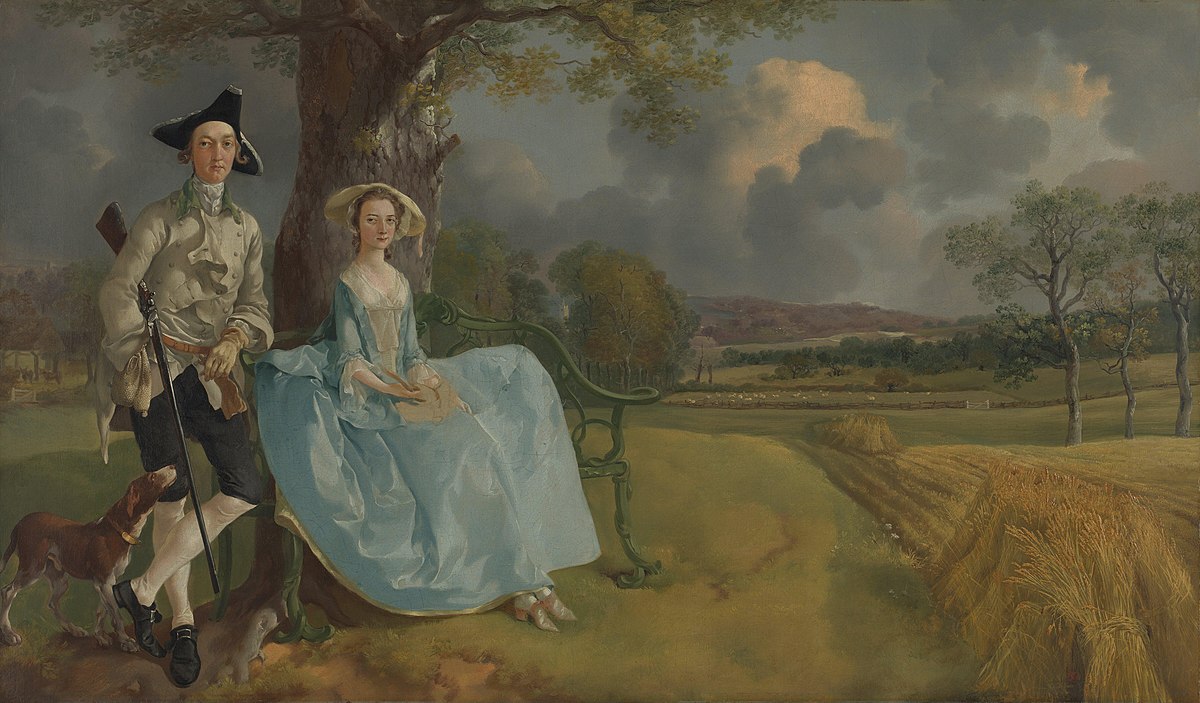
British artist Thomas Gainsborough painted this portrait around 1750, when he was about twenty-three years old. Robert Andrews and his wife Frances sit at the edge of their Suffolk estate, their land stretching behind them toward the churches where they worshipped and married. By 1750, Robert owned nearly 3,000 acres.
The painting has been called a "triple portrait" of the couple and their land. Gainsborough positioned them unusually on the far left, giving the landscape equal prominence. An unpainted patch on Mrs. Andrews's lap remains mysterious. Some speculate it was reserved for a pheasant her husband shot, others for a baby. The couple eventually had nine children.
The work stayed in the Andrews family until 1960 and was little known before appearing in an Ipswich exhibition in 1927. Today it's one of Gainsborough's most famous works, hanging at the National Gallery in London. The ornate carved and gilded frame features curling scrolls of leaves and shells.