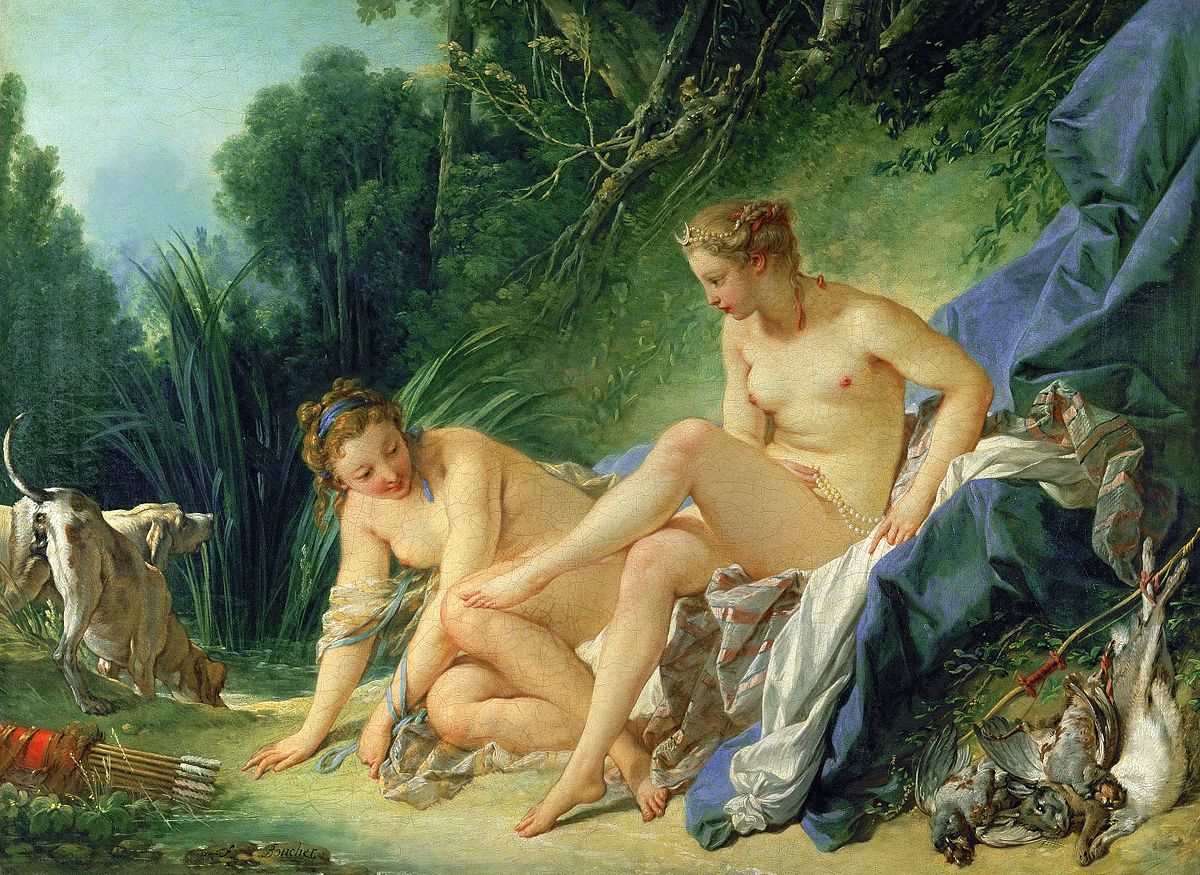
Diana Leaving the Bath
by François Boucher, 1742
Details
- Year
- 1742
- Medium
- Oil on canvas
- Size
- 57 cm × 73 cm
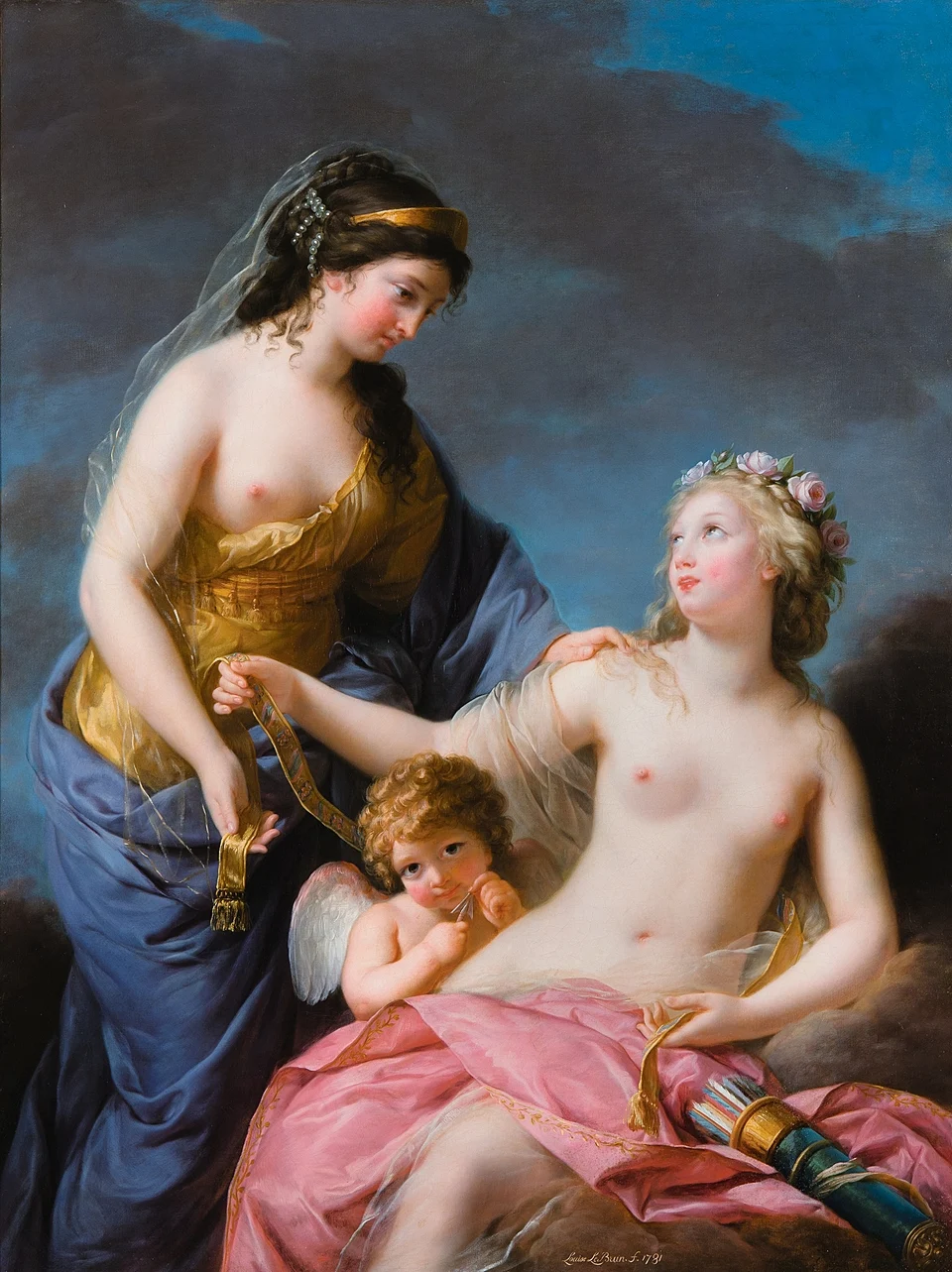
François Boucher painted this sensuous scene in 1742 for collectors' private cabinets. The goddess Diana sits on silk fabric beside a pool, a nymph attending her. Rather than the strong, bow-wielding huntress of mythology, Boucher presents her as charmingly innocent, unaware of being watched. Her hunting spoils lie nearby: a hare and two doves, the latter traditionally symbols of Venus.
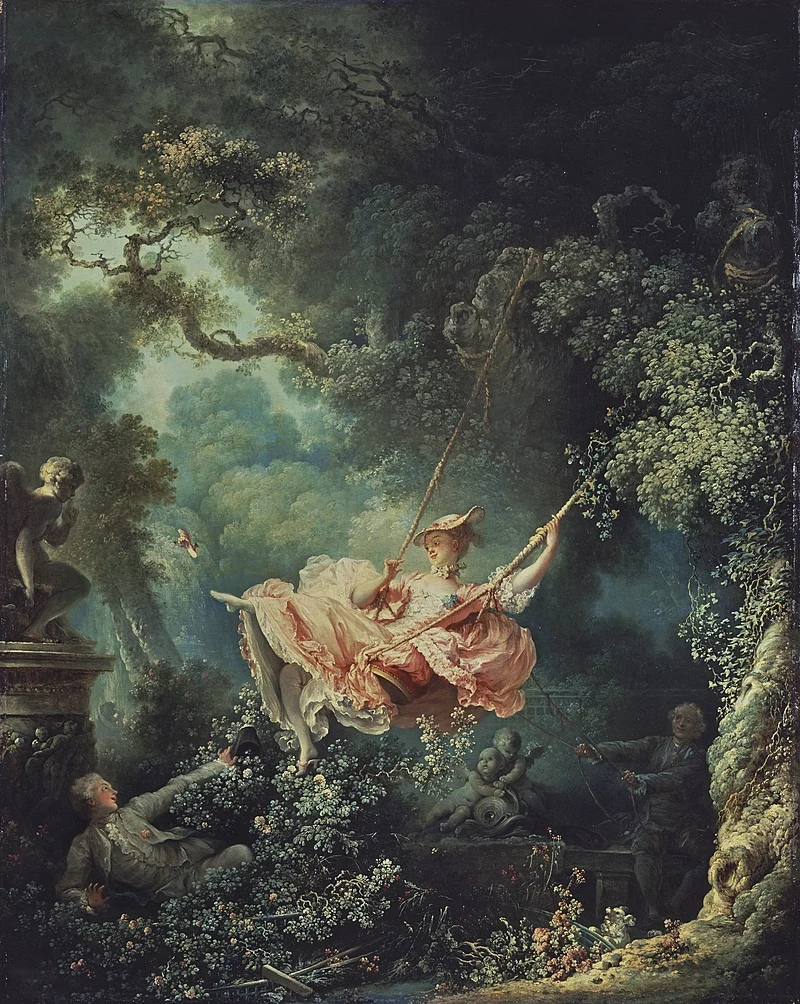
The painting captures everything about Rococo style: glossy surfaces, a palette favoring soft blues and pinks, playful grace, and barely concealed eroticism. Diana was a symbol of chastity, and Boucher plays up her innocence as a foil against impropriety. Critics like Diderot dismissed him, writing "That man is capable of everything except the truth."
The Louvre acquired the work in 1852. Boucher had a wide-ranging clientele, from bourgeois collectors to Madame de Pompadour. He became first painter to King Louis XV and director of the Académie, dying at 67 in his studio in the Louvre itself.