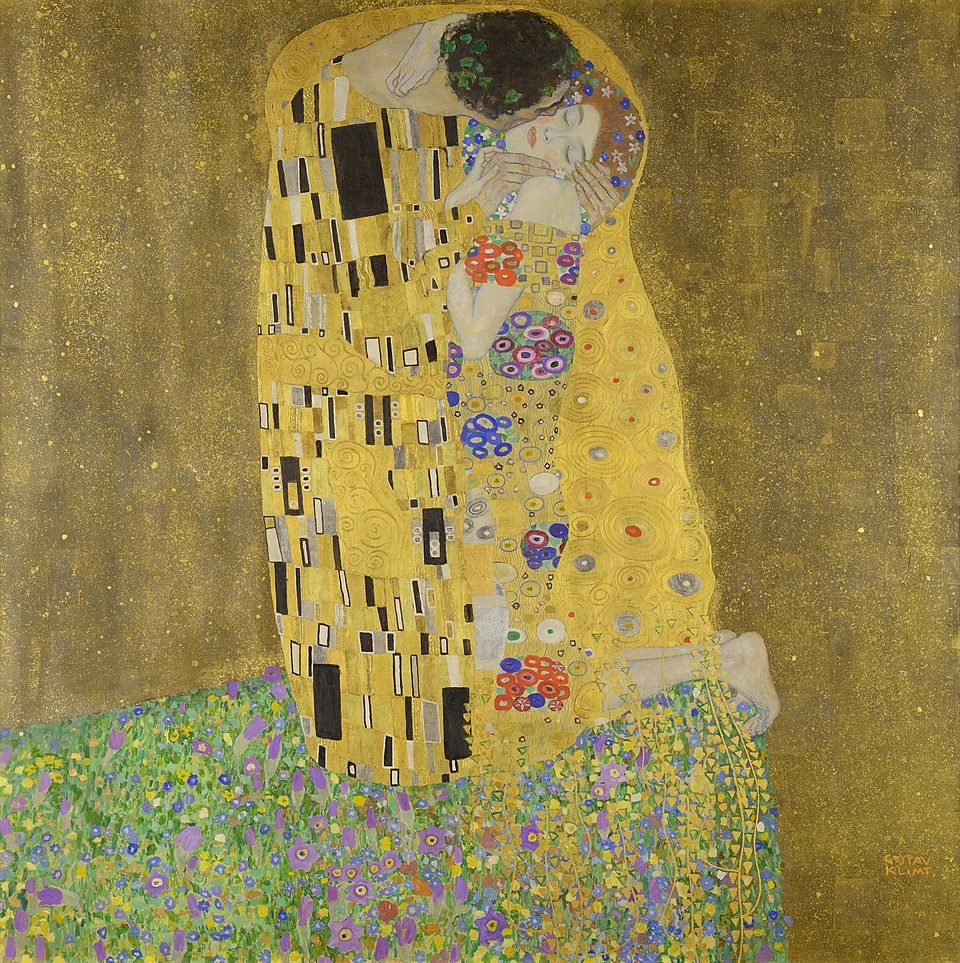
The Kiss
by Gustav Klimt, 1908
Details
- Year
- 1908
- Medium
- Oil and gold leaf on canvas
- Size
- 180 cm × 180 cm
- Gallery
- Upper Belvedere
Estimated Value
$150M
Expert estimate
Gustav Klimt painted The Kiss between 1907 and 1908, at the height of his Golden Period. A couple embraces on a flower-covered cliff edge. The man bends to kiss the woman's cheek; her eyes close in rapture. Their bodies dissolve into a single shape wrapped in gold and geometric patterns.
The Austrian government bought the painting before Klimt finished it, paying 25,000 crowns, five times higher than any previous painting sold in Vienna. It was exhibited in 1908 at the Kunstschau, a building Klimt helped design, during celebrations for Emperor Franz Joseph's sixtieth anniversary. The work became an instant icon.
At 180 by 180 centimeters, the canvas is a perfect square, unusual for its era. It now hangs at the Belvedere Museum in Vienna. Klimt combined oil paint with gold leaf, silver, and platinum, drawing on Byzantine mosaics he'd seen in Ravenna. His father and brother had been metalworkers, so gold carried personal meaning. This remains the most famous work of the Vienna Secession movement.
Historical Significance
Klimt's most famous work and a symbol of Vienna Secession, celebrated for its gold leaf decoration.