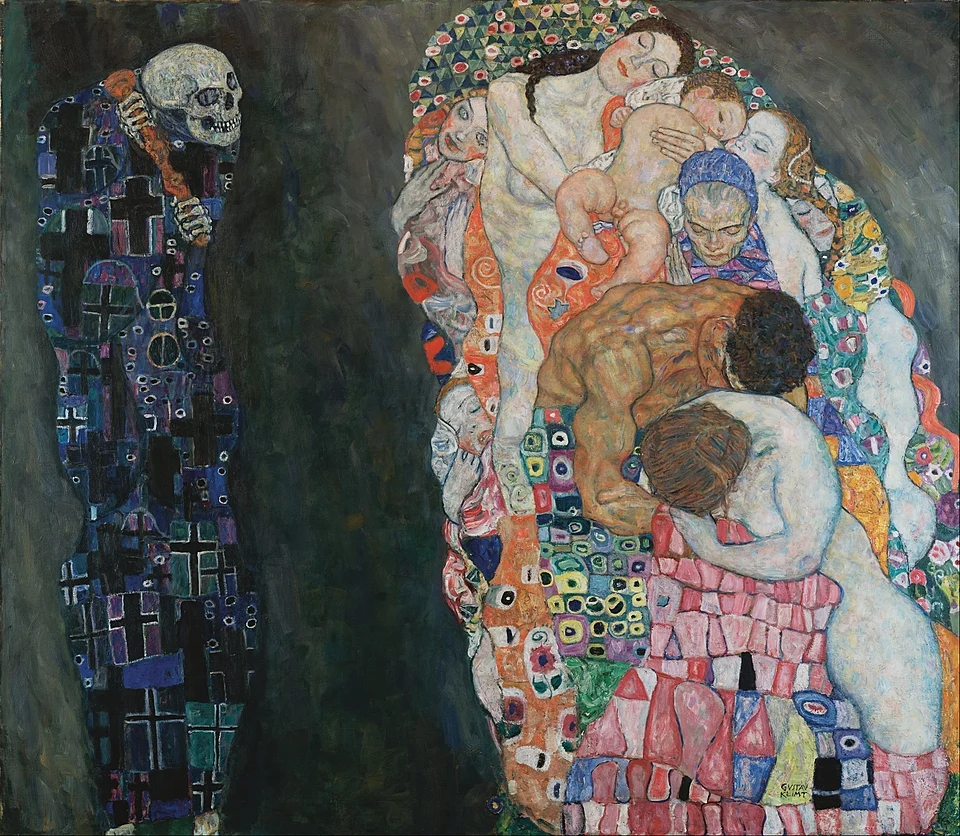
Death and Life
by Gustav Klimt, 1915
Details
- Year
- 1915
- Medium
- Oil on canvas
- Size
- 178 cm × 198 cm
Gustav Klimt worked on Death and Life from 1910 until 1916, reworking it several times despite winning a gold medal at the 1911 Rome exhibition. The composition divides into two halves. On the left, a skeletal figure wrapped in a cloak patterned with black crosses grips a club. On the right, a tangle of human bodies represents the full cycle of existence: babies, young lovers, mothers, elderly women, all intertwined.
Originally titled simply "Death," Klimt expanded the concept as he revised it. He repainted the gold background with bluish-gray, added more female figures to the Life group, and gave Death direct eye contact with the living. At 180 by 200 centimeters, it's the second-largest surviving painting from his career.
Klimt described this as his most important figurative work. It hangs at the Leopold Museum in Vienna, a fitting home given the city's role in his artistic development. The painting bridges his decorative Golden Period with his later, more expressionistic style.