Wikimedia Commons - CC BY-SA 3.0
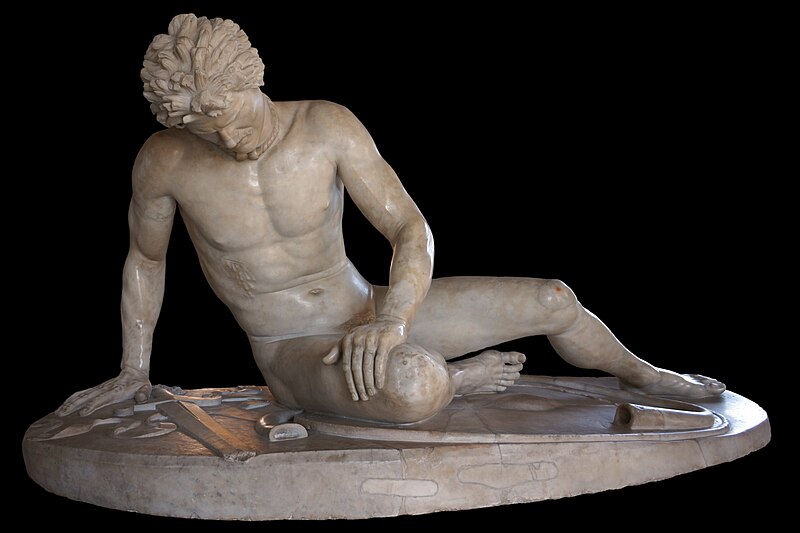
Dying Gaul
by Ancient Greek (Unknown), -230
Details
- Year
- -230
- Medium
- Marble (Roman copy)
- Size
- 93 cm × 187 cm (37 × 74 in)
The Dying Gaul depicts a wounded Celtic warrior in his final moments, propped on one arm as life ebbs away. This Roman marble copy preserves an Ancient Greek bronze original from around 230 BCE, commissioned to celebrate Pergamon's victory over the Galatians. The sculpture dignifies its subject even in defeat, showing the warrior's noble suffering rather than abject collapse.
The Gaul's distinctive features mark him as foreign: a torque around his neck, mustache, and tousled hair contrasting with clean-shaven Greek ideals. His sword and shield lie abandoned beside him. The psychological realism was radical, presenting an enemy as fully human rather than a caricature.
The statue has been at the Capitoline Museums in Rome since 1737, inspiring artists from Goya to contemporary photographers. It's one of the finest examples of Hellenistic emotional intensity in sculpture.