Andy Warhol
American·1928–1987
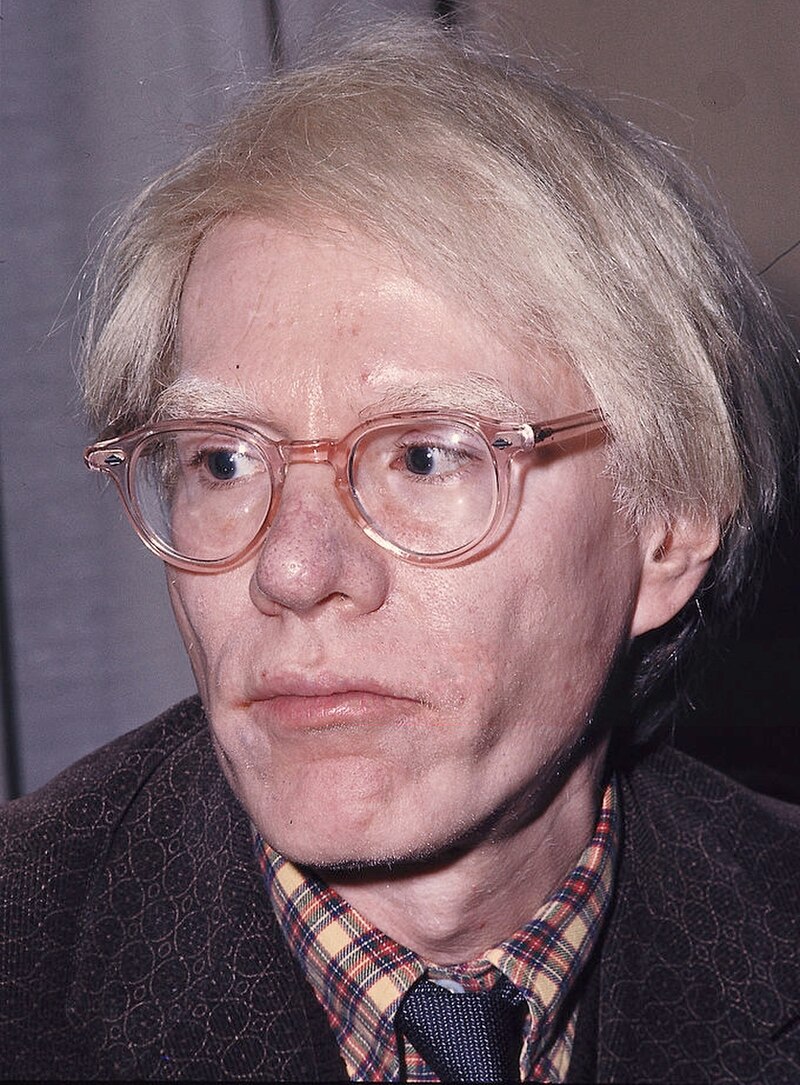
Andy Warhol (1928–1987) turned mass culture into high art. Born Andrew Warhola in Pittsburgh to Slovak immigrant parents, he suffered a childhood nervous disorder that kept him homebound for months. His mother supplied art materials and movie magazines that would shape his sensibility. He graduated from Carnegie Tech in 1949 and moved to New York, becoming one of the most successful commercial illustrators of the 1950s.
In 1962, Warhol exhibited his Campbell's Soup Cans, thirty-two canvases of identical soup cans, launching Pop Art into the mainstream. His silkscreen portraits of celebrities, including the iconic Marilyn Diptych (1962), blurred the line between art and advertising. His studio, The Factory, became a gathering place for intellectuals, drag queens, musicians, and celebrities. He produced films, managed the Velvet Underground, founded Interview magazine, and cultivated a carefully constructed public persona.
In 1968, Valerie Solanas shot and nearly killed him. He survived but never fully recovered physically. His later work included commissioned portraits and collaborations with younger artists like Jean-Michel Basquiat. He died unexpectedly in 1987 following gallbladder surgery. The Andy Warhol Museum in Pittsburgh, the largest U.S. museum dedicated to a single artist, preserves over 500 works. His art fills the Museum of Modern Art, Tate Modern, and the Whitney Museum. In 2022, Shot Sage Blue Marilyn sold for $195 million, the highest price for an American artwork at auction.
Notable Works by Andy Warhol
8 paintings catalogued with museum locations
Museums with Andy Warhol's Work
4 museums display Warhol's works. Click any museum to see visiting info and the specific works they hold.
About Andy Warhol
Warhol was the leading figure of Pop Art, which drew subject matter from advertising, consumer products, and celebrity culture. He blurred boundaries between fine art and commercial illustration, transforming soup cans, Brillo boxes, and movie stars into high art through silkscreen repetition.
Major collections are at the Andy Warhol Museum in Pittsburgh (the largest museum devoted to a single artist), MoMA, Tate Modern, and the Whitney Museum. His colorful silkscreens appear in museums worldwide.
His Campbell's Soup Cans (1962) and Marilyn Diptych (1962) are among the most recognized images of 20th-century art. The soup cans, comprising 32 canvases representing each variety, launched his fine art career. The Marilyn silkscreens, begun weeks after her death, explored celebrity and mortality.
The Factory was Warhol's legendary New York studio, first at 231 East 47th Street, famous as a gathering place for artists, musicians, celebrities, socialites, and the avant-garde throughout the 1960s. The silver-foil-covered space became a cultural laboratory where Warhol produced art, films, and managed the Velvet Underground.
Shot Sage Blue Marilyn sold for $195 million in May 2022, the highest price ever paid at auction for an American artwork and the second-highest for any artwork. The painting was one of five "Shot Marilyns," named after a visitor fired a gun at them in Warhol's studio in 1964.
Love Andy Warhol's Style?
Explore art inspired by Pop Art.
Browse Collection