Alfred Thompson Bricher
American·1837–1908
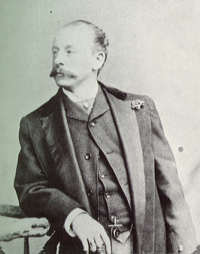
Alfred Thompson Bricher (1837–1908) was the last important painter of American Luminism. Born in Portsmouth, New Hampshire, he grew up in Newburyport, Massachusetts, and worked as a clerk in a Boston dry-goods store while teaching himself to paint. In 1858, meeting marine artists Charles Temple Dix and William Stanley Haseltine at Mount Desert, Maine, convinced him to become a professional painter.
Largely self-taught, Bricher established studios in Newburyport and Boston by 1859, focusing on New England landscapes. He was influenced by Hudson River School artists like Frederic Church and Asher Durand, earning a reputation for autumnal scenes. In 1864, he began working with Louis Prang & Company, the Boston firm that invented chromolithography, offering prints through their catalog.
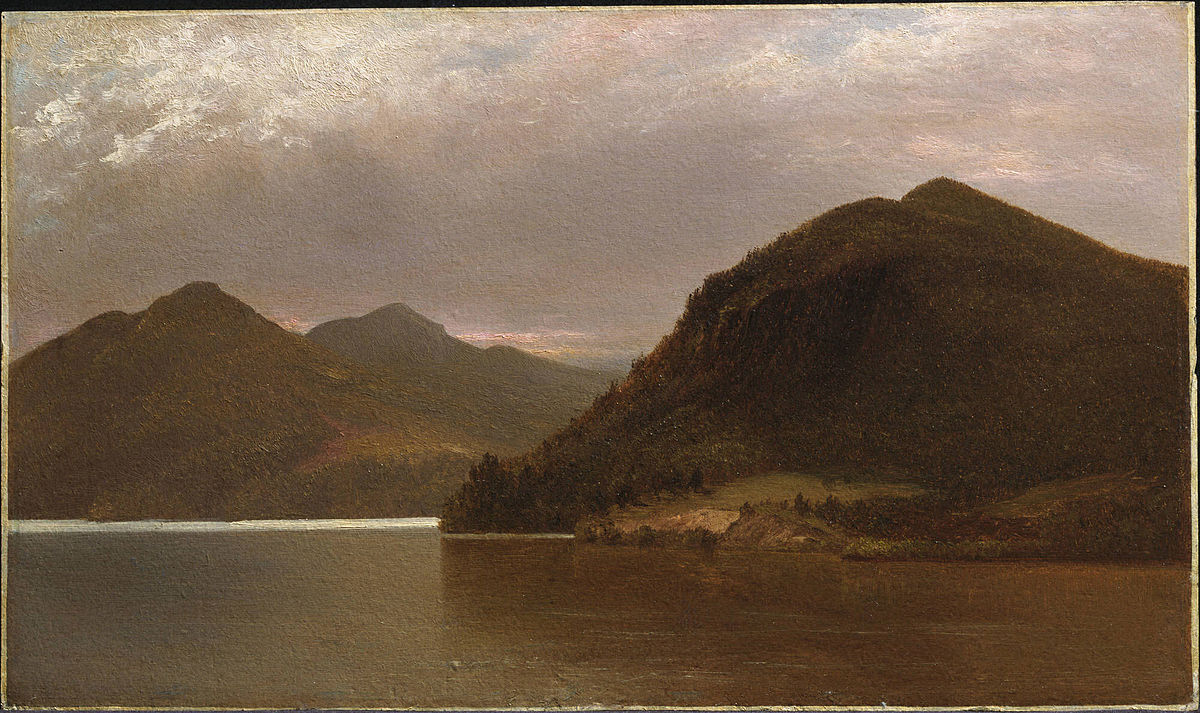
After moving to New York in 1868, Bricher increasingly focused on maritime subjects. He spent summers at Grand Manan and other coastal locations, producing watercolors and oils of beaches, waves, and rocky shores. A Luminist, he explored how light reflected, refracted, and absorbed across landscapes and seascapes, seeking both visual accuracy and spiritual luminosity. He was elected Associate of the National Academy of Design in 1879. In the 1890s, he purchased a home on Staten Island with views of the Atlantic and Raritan Bay. By his death in 1908, the Hudson River School had fallen from fashion. His reputation revived in the 1980s, and he's now credited as one of the nineteenth century's greatest maritime painters. His work is at the Metropolitan Museum of Art and the Smithsonian.
Notable Works by Alfred Thompson Bricher
1 painting catalogued with museum locations
Museums with Alfred Thompson Bricher's Work
1 museum displays Bricher's works. Click any museum to see visiting info and the specific works they hold.
Related Artists
Other Hudson River School artists you might like
About Alfred Thompson Bricher
His work is at the Metropolitan Museum of Art, the Smithsonian American Art Museum, and the Museum of Fine Arts, Boston. The Thyssen-Bornemisza Museum in Madrid and the National Gallery of Art in Washington also hold examples of his serene coastal scenes.
Bricher specialized in coastal and maritime scenes: New England beaches, rocky shores, breaking waves, and the effects of light on water. He favored the coasts of Massachusetts, Rhode Island, and Maine, particularly Grand Manan Island. His later works focused almost exclusively on Atlantic seascapes.
Largely self-taught, he learned by studying Hudson River School painters and sketching at Mount Desert, Maine, where he met marine artists Charles Temple Dix and William Stanley Haseltine. He may have taken classes at Boston's Lowell Institute, and he studied briefly with Albert Bierstadt and William Morris Hunt.
He continued painting in the Luminist style long after it fell from fashion around 1880. While other artists embraced Impressionism, Bricher maintained his commitment to precise detail and atmospheric stillness until his death in 1908. Art historical scholarship in the 1970s rehabilitated his reputation as a key American landscapist.
Love Alfred Thompson Bricher's Style?
Explore art inspired by Hudson River School.
Browse Collection