Maximilien Luce
French·1858–1941
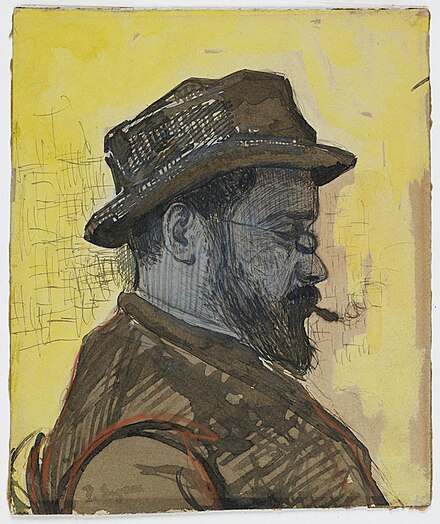
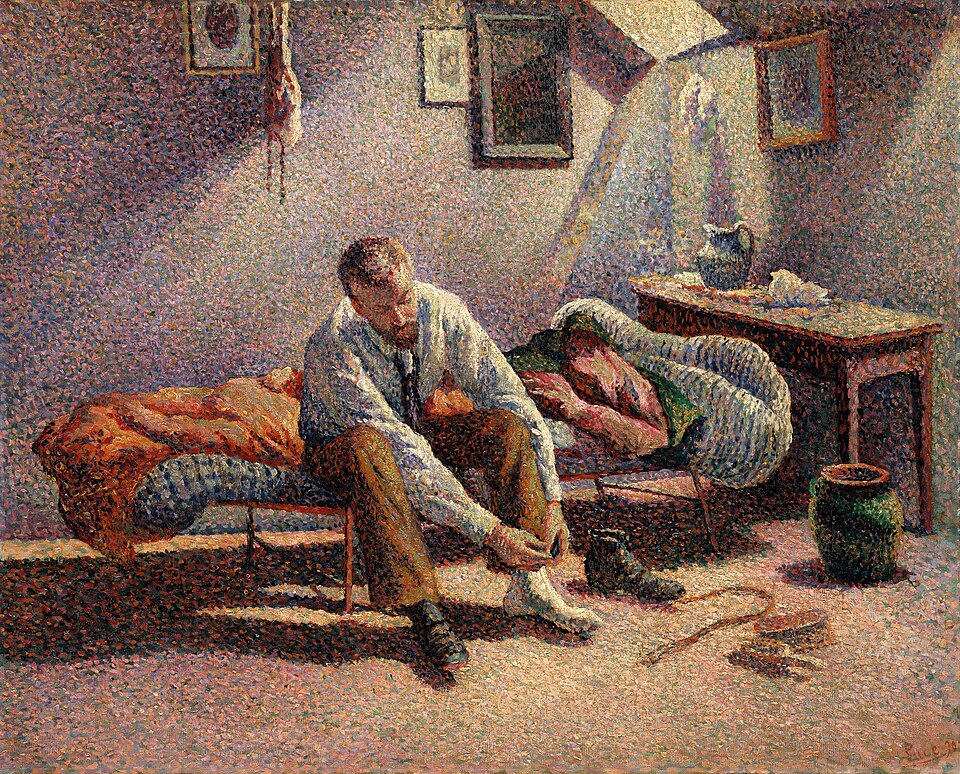
French Neo-Impressionist painter Maximilien Luce (1858-1941) was among the most productive artists of the Pointillist movement, creating over two thousand oil paintings depicting landscapes, urban scenes, and industrial laborers. Born in Paris to a railway clerk, he apprenticed as a wood engraver at fourteen while taking night classes in drawing. In 1884, he encountered the Divisionist technique developed by Georges Seurat, and his conversion to Pointillism brought recognition from Camille Pissarro and critic Félix Fénéon. Paul Signac purchased one of his earliest Neo-Impressionist works.
Luce aligned with the Neo-Impressionists not only artistically but also politically, sharing their anarchist beliefs. His illustrations appeared in socialist periodicals including La Révolte, and after President Sadi Carnot's assassination in 1894, Luce was arrested and imprisoned alongside Fénéon, accused in the Trial of the Thirty. After his Pointillist period, which a New York Times critic called his artistic pinnacle, Luce returned to a more Impressionistic style while maintaining interest in working-class subjects. His paintings of welders, steelworkers, and laborers brought industrial workers into fine art contexts. He served as vice president of the Société des Artistes Indépendants from 1909 and president from 1935, resigning in 1940 to protest Vichy laws banning Jewish artists. The Musée d'Orsay considers him "one of the best representatives of the neo-impressionist movement" and held a 2010 retrospective. His work also hangs at the Metropolitan Museum of Art.
Notable Works by Maximilien Luce
1 painting catalogued with museum locations
Museums with Maximilien Luce's Work
1 museum displays Luce's works. Click any museum to see visiting info and the specific works they hold.
About Maximilien Luce
Luce was a leading Neo-Impressionist painter who adopted the Pointillist technique developed by Georges Seurat around 1884 after being introduced to it by fellow artists Léo Gausson and Cavallo-Péduzzi. The Musée d'Orsay considers him 'one of the best representatives of the neo-impressionist movement.' He later returned to a more Impressionistic style.
The Musée d'Orsay in Paris holds significant works and mounted a 2010 retrospective. Paintings also hang at the Metropolitan Museum of Art, the Kröller-Müller Museum in the Netherlands, and the Indianapolis Museum of Art. His native Montparnasse neighborhood preserves his working-class subjects.
Luce painted landscapes, Paris scenes, and notably industrial workers including steelworkers, welders, pile drivers, and construction laborers. He brought working-class subjects into Neo-Impressionist contexts when most Pointillists painted leisurely bourgeois scenes. His socialist convictions shaped his choice of subjects throughout his career.
Yes, Luce was an anarchist whose illustrations appeared in revolutionary periodicals including La Révolte, Le Père Peinard, and Les Temps Nouveaux. He was arrested in 1894 on suspicion of involvement in President Carnot's assassination and spent 42 days in Mazas Prison before acquittal. He resigned his Société des Artistes Indépendants presidency in 1940 protesting Vichy anti-Jewish laws.
Luce created over 2,000 oil paintings plus comparable numbers of watercolors, gouaches, pastels, drawings, and over a hundred prints during his 60-year career spanning 1876 to 1941. He lived to age 83, remaining productive until the end despite the Nazi occupation of his beloved Paris in his final years.
Love Maximilien Luce's Style?
Explore art inspired by their style.
Browse Collection