James Hamilton
American·1819–1878
No Portrait Available
Romantic marine painter James Hamilton (1819-1878) earned the title "the American Turner" for his dramatic seascapes featuring storms, naval battles, and shipwrecks illuminated by bursts of brilliant color. Born in Belfast, Ireland, he immigrated to Philadelphia at age fifteen, where wealthy patrons and local artists encouraged his training at the Pennsylvania Academy of the Fine Arts. Hamilton's only documented trip abroad came in 1854-1855, when he studied J.M.W. Turner's paintings in England, absorbing the master's atmospheric effects and luminous palette that would define his mature work.
Hamilton worked primarily in Philadelphia, painting marine views that ranged from calm harbors to violent tempests. He also produced landscapes and served as an illustrator, contributing images to John Frost's Pictorial History of the American Navy and collaborating with Arctic explorer Elisha Kent Kane on two expedition accounts with dramatic ice scenes. One painting, "What Are the Wild Waves Saying," so impressed Charles Dickens that the novelist accepted it as a gift during his American tour, the only artwork he took home. Hamilton notably taught Thomas Moran, who would become America's great painter of western landscapes. In 1875, Hamilton sold most of his possessions anticipating a world journey, reaching San Francisco in 1876, where the artistic community welcomed him warmly before his unexpected death in 1878. His marine paintings hang at the Metropolitan Museum of Art, the Museum of Fine Arts, Boston, and the Smithsonian American Art Museum.
Notable Works by James Hamilton
1 painting catalogued with museum locations
Museums with James Hamilton's Work
1 museum displays Hamilton's works. Click any museum to see visiting info and the specific works they hold.
Related Artists
Other Romanticism artists you might like
About James Hamilton
Hamilton earned this title for his Turner-influenced seascapes featuring storms, brilliant light effects, and atmospheric color. He traveled to England in 1854-1855 specifically to study Turner's paintings firsthand. Critics noted his ability to capture the same dissolving, luminous quality in his storm scenes.
Works hang at the Metropolitan Museum of Art, the Museum of Fine Arts, Boston, the Smithsonian American Art Museum, and the Brooklyn Museum. Philadelphia's Pennsylvania Academy, where he studied and taught, also holds significant works.
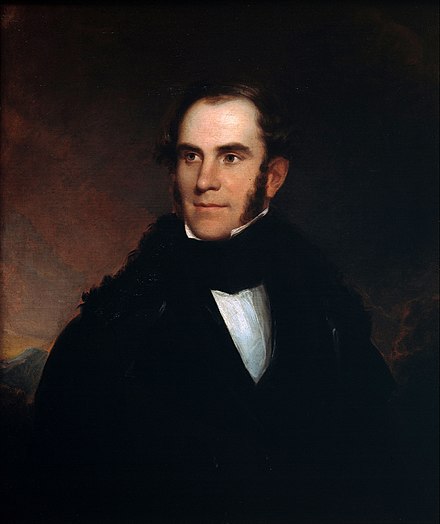
Thomas Moran, who became famous for his paintings of Yellowstone and the Grand Canyon, studied with Hamilton in Philadelphia during the 1850s. Hamilton's influence shows in Moran's dramatic use of light and atmospheric effects in his Western landscapes.
Hamilton worked as an illustrator, contributing dramatic images to naval histories and Arctic exploration accounts. His illustrations for Elisha Kent Kane's polar expeditions brought him recognition beyond the art world. He also created illustrations depicting Civil War naval battles.
Love James Hamilton's Style?
Explore art inspired by Romanticism.
Browse Collection