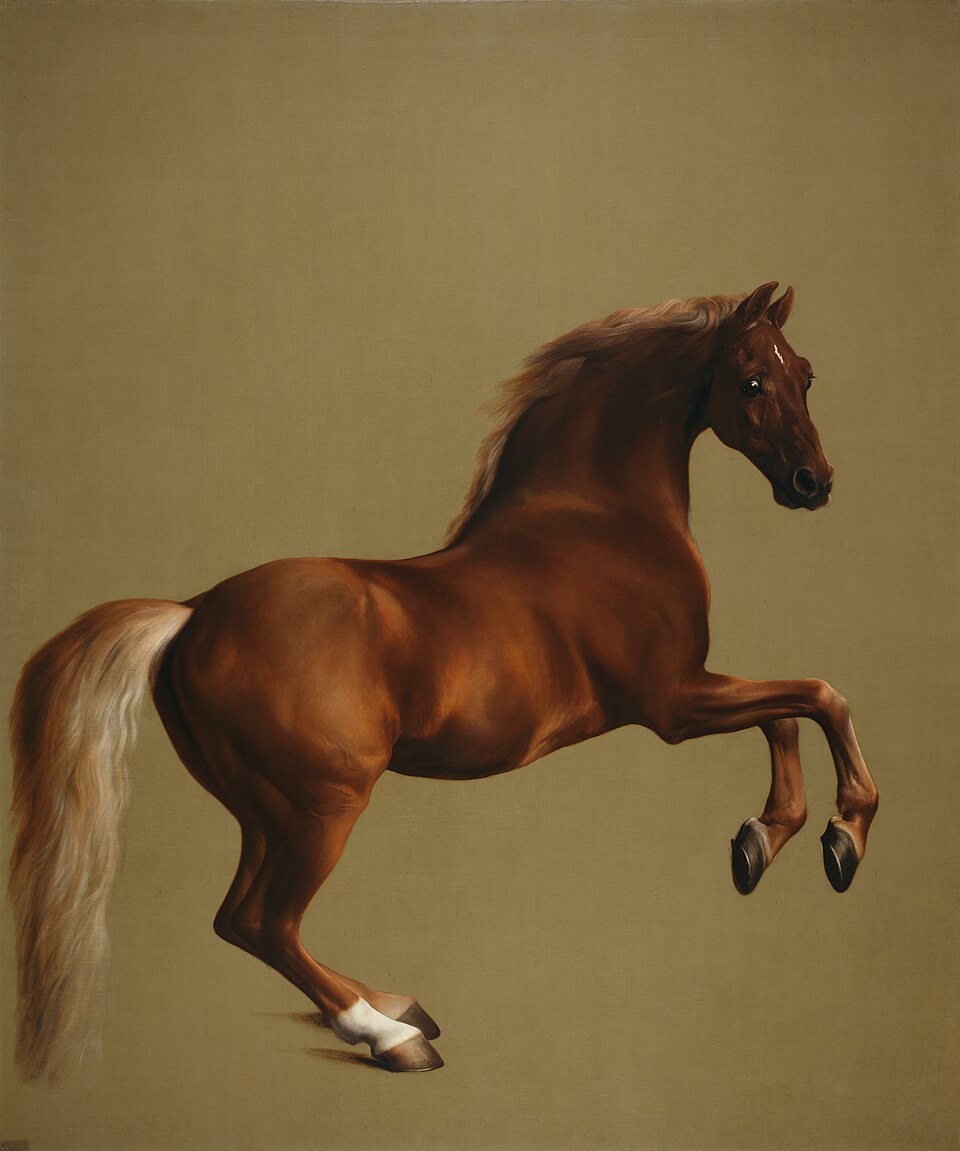
Whistlejacket
by George Stubbs, 1762
Details
- Year
- 1762
- Medium
- Oil on canvas
- Size
- 292 cm × 246 cm
In 1762, George Stubbs created this notable oil on canvas painting that reflects the artistic concerns of the Rococo and Neoclassical period, capturing the visual language of its time. As a British artist, George Stubbs brought unique cultural perspectives to their work.
The composition demonstrates George Stubbs's command of visual elements including color, form, and spatial arrangement. Each element contributes to a unified whole that rewards close looking. The work reflects both technical accomplishment and artistic vision.
Today, this painting resides in the permanent collection of National Gallery in London, where visitors can experience its presence firsthand. Seeing the work in person reveals details of brushwork, scale, and color that reproductions cannot fully convey. The museum's collection provides important context for understanding this piece alongside other significant works from the same period and artistic tradition.
George Stubbs (1724-1806) was a British artist whose work contributed significantly to the art of the period. The artist's body of work demonstrates consistent themes and evolving technique across their career.