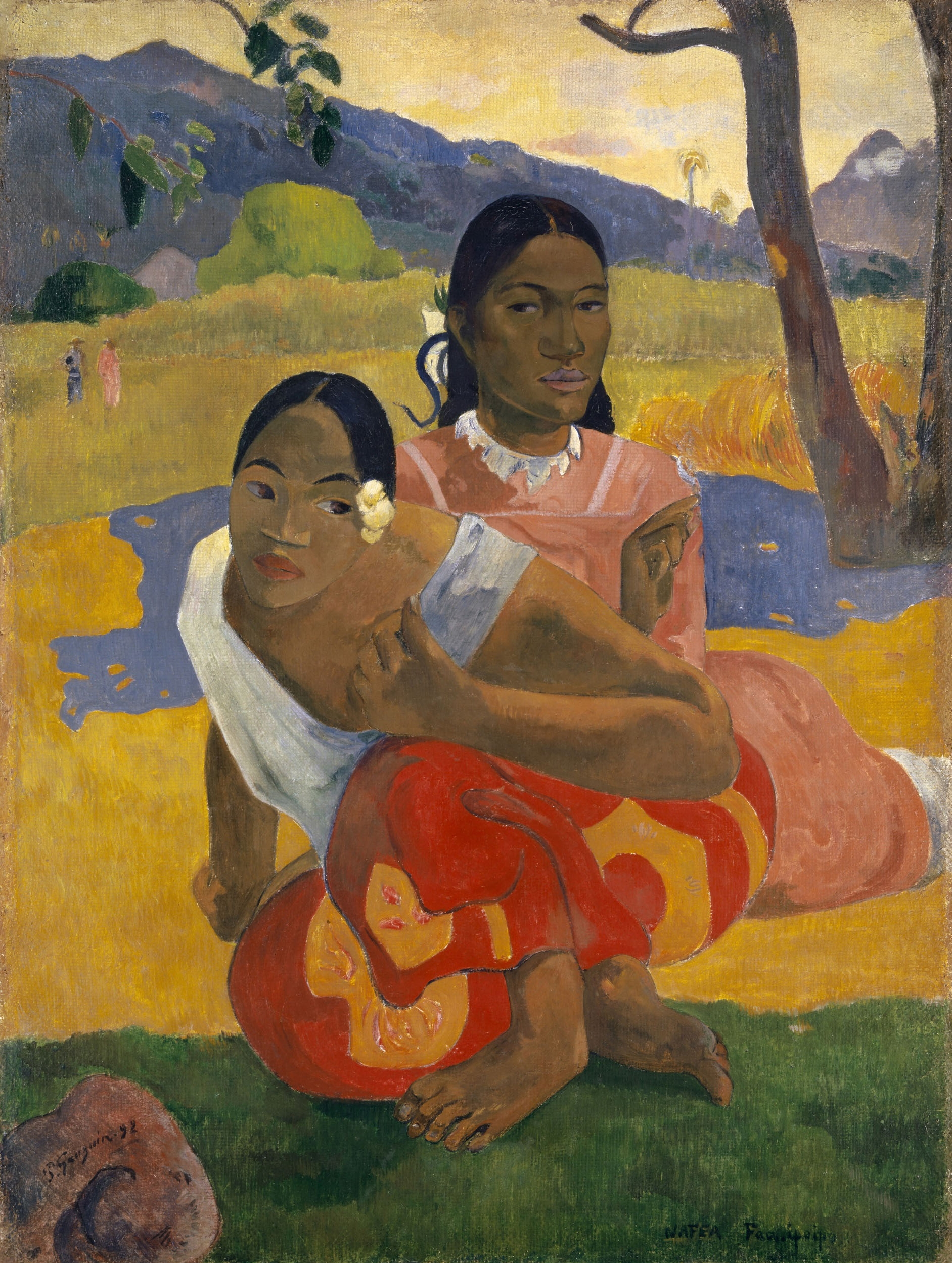
When Will You Marry?
by Paul Gauguin, 1892
Details
- Year
- 1892
- Medium
- Oil on canvas
- Size
- 101.5 cm × 77.5 cm
Auction History
$210M
Private Sale / Switzerland
February 1, 2015
Seller
Rudolf Staechelin Family Trust
Buyer
Qatar Museums (reported)
French artist Paul Gauguin painted this scene during his first stay in Tahiti in 1892. Two Polynesian women occupy the foreground against a landscape of tropical greens, blues, and yellows. The woman in front wears a Western-style dress, while the one behind her dresses traditionally and makes a gesture some scholars interpret as a Buddhist mudra.
The title comes from the Tahitian phrase "Nafea faa ipoipo," which Gauguin inscribed on the canvas. The question suggests a narrative tension between the two figures, perhaps representing the clash between traditional Polynesian culture and European colonial influence. Gauguin had left France seeking what he called a more primitive and authentic life, though his romanticized vision of Tahiti often obscured complex colonial realities.
The painting sold privately in 2015 for approximately $210 million, briefly making it the most expensive artwork ever sold. It now belongs to the Qatar Museums and occasionally travels for special exhibitions.